
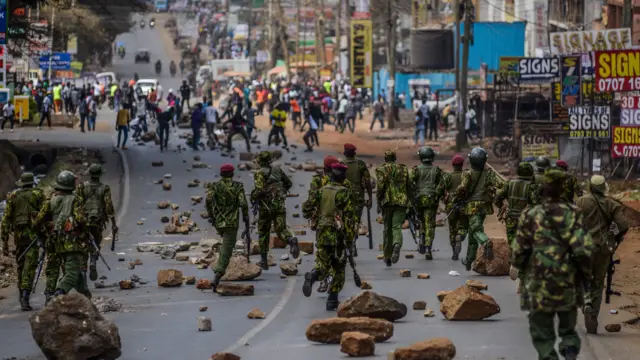
Kenya is today (7 July) marking another volatile Saba Saba Day as mass protests paralyzed transport, shuttered businesses, and ignited fresh anger toward President William Ruto’s government.
In scenes reminiscent of the 1990 pro-democracy uprisings that birthed the Saba Saba — meaning “seven seven” in Kiswahili — tradition, protesters on Monday blocked key roads including the Embu-Nairobi and Karatina-Nairobi highways, using stones and burning tires. Police struggled to regain control as demonstrators demanded economic justice and an end to police brutality. In Nairobi, authorities set up roadblocks across major arteries effectively locking thousands out of the city center. Public transport was suspended, with only private vehicles allowed through after inspection.
The protests, largely youth-led and leaderless, were reignited by the unexplained death of blogger Albert Ojwang in police custody and reflect mounting dissatisfaction with Ruto’s leadership. His tax-heavy economic policies and perceived authoritarianism have triggered calls for him to resign after just one term. Despite government assurances of ‘business as usual, many civil servants stayed home. Human rights groups warned of rising disappearances, extrajudicial killings, and crackdowns on dissent.
For analyst Mutima Kithinji, many of the problems from 1990 are still prevalent today. Pointing to “the striking similarity between the Gen Z protests of 2024-25 and the Saba Saba protests of the ’90s,” Kithinji says the current wave or protests show that “the Gen Zs feel the leadership does not address their issues: accountability, economic injustice, corruption, disappearance of people, extrajudicial killings, among others.” As lawmakers propose further restrictions on protests, many fear Kenya is backsliding into a familiar era of state control and public resistance.