
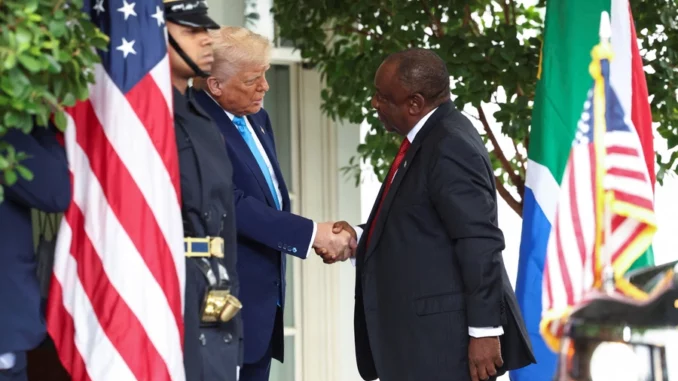
South African President Cyril Ramaphosa has voiced on July 8 strong opposition to the United States’ decision to impose a 30% tariff on all South African imports, labelling the move as “unilateral” and unreflective of the actual trade relationship between the two nations.
The new tariff, announced by President Donald Trump and set to take effect on 1 August 2025, singles out South Africa as the only sub-Saharan country affected. Trump argues the country has maintained persistent trade deficits through restrictive tariff and non-tariff barriers, a claim Ramaphosa rejects, stating that most U.S. goods enter South Africa duty-free, with an average tariff of only 7.6% on others.
The tariff announcement has shaken South Africa’s key export sectors — including automobile, agriculture and textiles — which previously benefited from duty-free access under the African Growth and Opportunity Act (AGOA). Agriculture Minister John Steenhuisen warned in parliament that Trump’s move signals a potential end to AGOA privileges, stressing the need for urgent economic reforms to sustain international trade partnerships. Trump’s communication also included threats of further hikes should South Africa retaliate, stating that any reciprocal increase in tariffs would be added to the current 30% rate.
Relations between Washington and Pretoria have steadily deteriorated since Trump assumed office, exacerbated by his administration’s decision to cut aid to South Africa over unsubstantiated claims of racial discrimination. Though Ramaphosa met with Trump in May to ease tensions, discussions were marred by contentious narratives around land reform and farm killings. Despite these challenges, South Africa’s president affirmed his commitment to diplomacy and constructive engagement, calling for a more “balanced and mutually beneficial” trade arrangement with the United States.