
Africa is strategically positioned at the heart of the global energy transition as the international order undergoes significant recalibration.
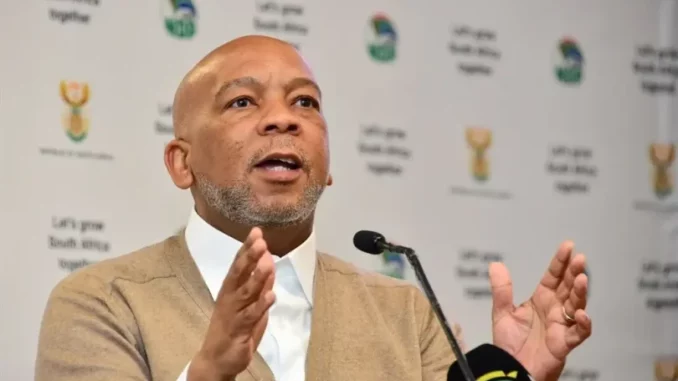
Addressing delegates at the Africa Energy Indaba at the Cape Town International Convention Centre on Tuesday, Electricity and Energy Minister, Dr Kgosientsho Ramokgopa, described the moment as one of historic consequence, shaped by geopolitical tensions, intensifying conflicts and a structural transformation of the global energy system.
He noted that supply chains are being reshaped by strategic rivalry, while major economies are deploying expansive industrial policies and subsidy regimes to secure clean technology value chains.
The Minister emphasised that energy has become central to global power dynamics, placing Africa in a structurally pivotal role rather than on the periphery. He argued that the global transition to net zero emissions is materially dependent on the continent’s mineral wealth.
Platinum group metals are essential for scaling the hydrogen economy; cobalt, manganese and copper underpin battery technologies; vanadium supports long-duration storage; and uranium is critical to renewed nuclear ambitions. Without these resources, he said, the global clean energy shift would stall.
However, Ramokgopa cautioned that structural importance does not automatically translate into prosperity. He warned against replicating historical patterns in which Africa exported raw materials while value addition and industrial gains accrued elsewhere.
As industrial policy re-emerges as a defining feature of global competition, he urged African nations to assert a deliberate and self-defined development path that avoids reinforcing past asymmetries under the banner of new technologies.
Central to this ambition, he said, is the transformation of Africa’s electricity systems. Mineral wealth alone will not secure industrialisation without reliable, affordable and resilient energy infrastructure. Beneficiation, he stressed, requires stable power for battery precursor facilities, green steel production and hydrogen generation.
Moving from extraction to manufacturing will depend on strengthening transmission networks, expanding renewable capacity and building domestic manufacturing capability in transformers, cables, storage systems and renewable components.
The Minister also called for sustained investment in engineering skills, technical training institutions and research partnerships to embed technological competence across African economies. Infrastructure development, he added, must function as industrial policy in action, ensuring each project deepens domestic capacity and enterprise development.
Concluding his address, Ramokgopa urged the continent to translate ambition into execution, arguing that Africa’s energy future must be built through disciplined planning, integrated markets and unified purpose, with the continent firmly in control of its developmental trajectory.