
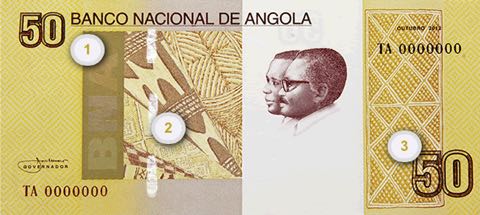
The official financial inclusion rate in Angola stands at approximately 50 per cent, according to data reported on Monday, 16 March 2026 by the Agência Angola Press (ANGOP).
This figure reflects the proportion of the population that currently has access to formal financial services in the country, highlighting persistent challenges in integrating all citizens into the financial system.
The latest assessment comes as Angola continues to grapple with structural barriers to financial inclusion, including limited access to banking services outside major urban centres and low levels of financial literacy among the population, a scenario corroborated by recent statistics showing nearly half the population remains excluded from formal financial channels.
These dynamics underscore the complexity of broadening financial participation across diverse demographic and geographic groups.
In response to these shortcomings, the government has been advancing the National Financial Inclusion Strategy (ENIF) 2025–2027, which aims to increase the proportion of Angolans engaged with formal financial institutions. Under the strategy, authorities seek to expand access to savings, credit, and digital financial services while enhancing financial education to equip citizens with the skills needed to manage financial products effectively.
Despite the current inclusion rate hovering around 50 per cent, policy-makers have set more ambitious targets for the medium term. Initiatives tied to ENIF propose raising financial inclusion to higher levels by 2027, focusing on expanding digital and mobile banking solutions and fostering partnerships with the private sector and civil society to mobilise resources and expertise.
Experts and officials argue that accelerating financial inclusion is crucial not only for individual economic empowerment but also for broader socio‑economic development, as increased access to financial services can stimulate entrepreneurship, support small businesses and strengthen economic resilience.