
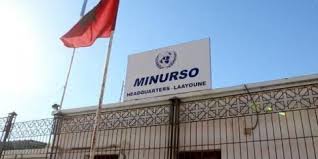
The United States has hardened its position on the Western Sahara conflict to an unprecedented degree, with Ambassador to the United Nations Mike Waltz explicitly conditioning the renewal of the MINURSO peacekeeping mandate on the establishment of a genuine political process grounded in Morocco’s autonomy plan. Testifying before the Senate Foreign Relations Committee on Wednesday under the theme ‘Reforming the UN: Assessing US Efforts and Priorities’, Waltz stated that Washington had insisted on linking the mandate renewal to talks based on the Moroccan proposal — a declaration that goes far beyond the diplomatic support the US has previously expressed and directly reshapes the institutional future of the UN mission.
MINURSO was established in 1991 to organize a self-determination referendum that has never materialized. For more than three decades, successive Security Council resolutions have extended its mandate while the referendum option has progressively lost political traction. UN Security Council Resolution 2797, adopted on 31 October 2025, marked the clearest formal break yet with the referendum framework: it endorsed the Moroccan autonomy proposal as the primary basis for a political settlement, sidelining the independence option and opening the door to a structural review of MINURSO’s role and mandate. Algeria, then a non-permanent Security Council member, conspicuously abstained from the vote.
Waltz’s Senate testimony adds a sharper American edge to this trajectory. He referenced ongoing discussions led jointly by the US and the UN to resolve what he described as a conflict frozen for fifty years, signaling impatience with a status quo the Trump administration views as unacceptable and strategically costly. He had already announced a strategic review of MINURSO in March, framing the mission’s longevity as a problem to be corrected rather than a norm to be maintained. The conditional language he used before the Senate goes a step further: it transforms American support for the Moroccan plan from a diplomatic preference into a procedural requirement.
The timing is deliberately calibrated. On 24 April, the Security Council will hold closed consultations on MINURSO, with briefings from mission head Alexander Ivanko and personal envoy Staffan de Mistura. On 30 April, Secretary-General António Guterres is expected to present a formal strategic review of the mission before the full Council — an occasion described by observers as a potential watershed, with consequences that could fundamentally redefine MINURSO’s mission, mandate and resources for the coming years.
The American diplomatic choreography preceding this date has been intensive. A January meeting in Washington brought a Polisario delegation face-to-face with US officials; a trip to Algiers by envoy Massad Boulos placed Algeria’s role explicitly on the table; and a February multilateral session in Madrid brought Morocco, Algeria, Mauritania and the Polisario together under joint US-UN facilitation for the first time since 2019. Morocco presented its autonomy plan in full at that gathering. Together, these steps make the 30 April Security Council session the most consequential moment in the Western Sahara file in years — one that, in the words of Le360, will produce a clear before-and-after.