
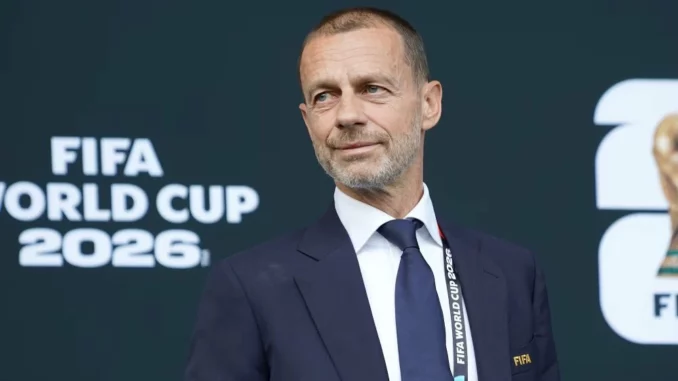
The football federations of thirteen nations have published a joint communiqué on the website of the Fédération Royale Marocaine de Football expressing their strong disagreement with recent remarks made by UEFA president Aleksander Ceferin, who criticized the expansion of the FIFA World Cup to 48 teams and characterized many of the tournament’s group-stage matches as being without interest. The signatory nations are Cape Verde, Curaçao, Uzbekistan, the Democratic Republic of Congo, Haiti, Algeria, Tunisia, Morocco, Egypt, Ghana, Senegal, Côte d’Ivoire, and South Africa.
The federations stated that they respectfully but firmly reject these comments, emphasizing that for their nations no World Cup match is without significance. They drew a direct contrast between the perspective expressed by the European body’s president and the lived reality of countries for whom World Cup qualification carries a weight that goes well beyond sporting achievement. For Cape Verde, Curaçao, and Uzbekistan, the statement notes, reaching the World Cup represents a historic accomplishment and the realization of a collective dream built across generations of players and supporters.
For Congo and Haiti, the communiqué highlights the particular emotional resonance of returning to the world’s premier football stage after extended absences — a return that millions of supporters in those countries have waited years or decades to witness. The federations’ representatives argued that suggesting such matches are of lesser importance reflects a profound failure to recognize the efforts, sacrifices, and aspirations not only of the players and coaches who earned qualification, but of the entire communities they represent.
The joint statement frames the disagreement within a broader philosophical position on the nature of world football. The strength of the sport, the federations argue, lies in its universality — its capacity to bring together radically different cultures, histories, and football traditions on a single global stage. Reducing the value of that universality by implying that some qualifying nations matter less than others runs counter to what the World Cup is designed to represent.
The thirteen federations concluded by reaffirming that each team in the tournament earned its place on merit, that each match carries real and profound meaning for millions of people around the world, and that the development of football globally must continue to create opportunity, inspire new generations, and strengthen the sport’s character as a genuinely worldwide phenomenon. They called on the football governance community to recognize the full breadth of what the expanded World Cup represents for the nations participating in it for the first time or returning after long absences.