
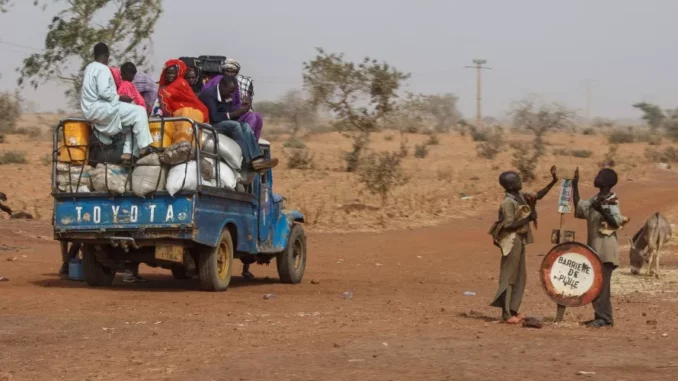
Climate change is emerging as an additional driver of displacement across Africa, as recurring droughts, floods and extreme heat compound existing humanitarian crises and strain the capacity of vulnerable countries to protect millions of refugees and internally displaced people.
The United Nations High Commissioner for Refugees (UNHCR), in a report released ahead of the COP31 climate conference in Turkey, said nearly 90 million forcibly displaced people live in countries highly exposed to climate-related risks, representing three-quarters of the world’s forcibly displaced population.
Sub-Saharan Africa is among the regions facing growing risks, as armed conflicts, economic vulnerability and extreme weather events make it increasingly difficult for displaced people to return home or establish stable lives in host communities.
Africa faces renewed displacement risks
UNHCR warned that rising temperatures pose mounting risks to sub-Saharan Africa, projecting that by 2050, one in three refugee settlements in the region could experience at least 100 days of dangerously high temperatures annually.
The consequences extend beyond health and living conditions, affecting food security, water availability and employment opportunities, particularly in communities where refugees and local populations depend on agriculture, livestock and natural resources.
In East Africa, the report’s projections indicate that El Niño-related flooding could displace up to three million people in Somalia, Kenya, South Sudan and Uganda by the end of 2026.
The figures point to a growing risk of repeated displacement, with people who have already fled conflict and violence potentially forced to leave their places of refuge again because of climate-related disasters.
Climate funding gap compounds the crisis
Despite the scale of the challenges facing African countries, UNHCR said fragile and conflict-affected states hosting large displaced populations receive only 10% of global climate finance.
The funding gap raises questions about the distribution of international resources, particularly as countries with limited capacity to respond to disasters need additional investment in infrastructure, water systems, agriculture and early-warning mechanisms.
Insufficient funding also limits host countries’ ability to provide essential services to refugees and local communities, potentially intensifying competition over resources in areas already facing economic and social pressures.
UNHCR is calling for refugees and displaced people to be included in national climate adaptation plans and to have access to international climate finance, rather than relying primarily on emergency humanitarian assistance.
African priorities ahead of climate summit
The warnings come ahead of the United Nations climate conference in Antalya, Turkey, scheduled for Nov. 9-20, where African countries are expected to push for increased funding for climate adaptation and stronger resilience among vulnerable communities.
The UN Economic Commission for Africa has identified climate justice, improved access to financing and investment in resilient infrastructure among the continent’s priorities for the conference, as pressure grows to translate international commitments into concrete projects.
African governments face a dual challenge: protecting populations from climate-related disasters while ensuring stable conditions for refugees and displaced people, so that droughts and floods do not become additional drivers of displacement, poverty and vulnerability.
As warnings mount over rising temperatures and increasingly severe weather events, climate-related displacement is emerging as a test of the international community’s ability to turn its commitments into funding that reaches those most exposed to the risks.