
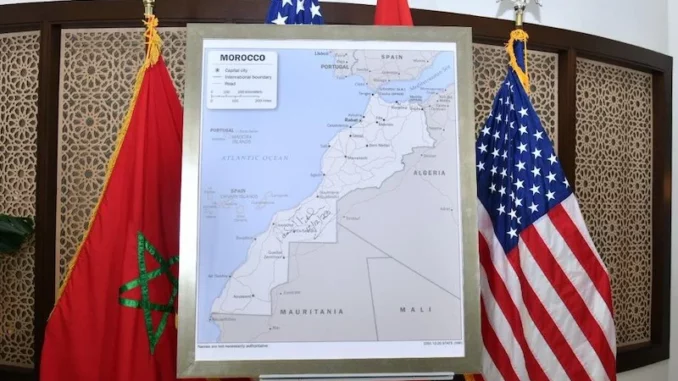
The United States is pressing forward with an unprecedented diplomatic push to resolve the Sahara conflict, convening a third round of negotiations in Washington on February 23–24, barely two weeks after talks in Madrid and less than a month after an initial session in the American capital. The accelerated pace signals the Trump administration’s determination to secure a framework agreement before summer.
Massad Boulos, President Trump’s envoy for Africa, convened the latest round alongside US Ambassador to the United Nations Michael Waltz, placing the process under direct White House oversight. Morocco’s Foreign Minister Nasser Bourita, Algeria’s Ahmed Attaf, Mauritania’s Mohamed Salem Ould Merzoug, and Polisario representative Mohamed Yeslem Beisat are all expected at the table, with UN Special Envoy Staffan de Mistura also in attendance. Notably, Algeria’s participation marks a reversal after years of refusing to join UN-sponsored roundtable discussions — a position Algiers had previously declared irreversible.
The urgency is driven by a concrete deadline. Under UN Resolution 2797, adopted in October under American impetus, the Secretary-General must deliver a strategic review of the MINURSO mandate by late April. Washington aims to present a locked-in framework by then, one that would fundamentally reshape the UN’s role in the dossier. The resolution already narrowed the negotiating parameters by affirming the preeminence of autonomy under Moroccan sovereignty.
At the center of discussions is an expanded version of Morocco’s autonomy plan — a roughly 40-page document detailing regional authority over education, health, economic development, and culture, while reserving defense, diplomacy, and currency for Rabat. American engagement now extends beyond diplomacy, with some members of Congress floating the possibility of designating the Polisario as a terrorist organization. Never before has the US invested this level of political capital in the Sahara file.