
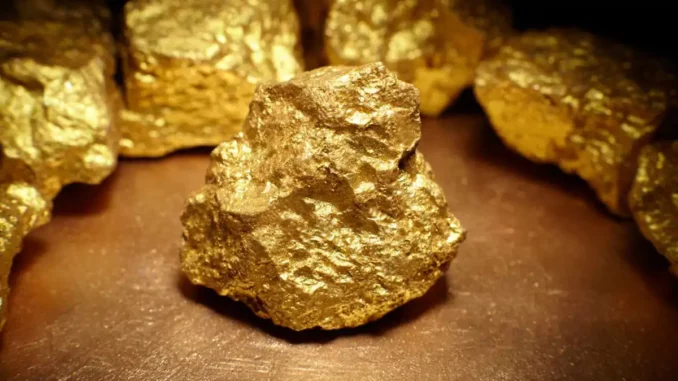
Guinea has imposed an immediate ban on the export of unrefined gold as part of efforts to increase domestic processing, create jobs and retain greater value from the country’s mineral resources.
The directive was announced following a meeting between President Mamadi Doumbouya and industrial as well as artisanal gold producers and buyers on Monday, June 22.
Under the new policy, all gold produced in Guinea must be refined locally before it can be exported. Doumbouya said the move is aimed at ensuring that Guinea benefits more from its natural resources, noting that other countries have long profited from processing and trading Guinea’s raw materials.
Guinea, Africa’s sixth-largest gold producer, exported more than 22 tonnes of gold during the first quarter of 2026. A new refinery nearing completion in the capital, Conakry, is expected to process the country’s gold production, with an annual refining capacity of 250 tonnes.
Authorities have warned that companies that fail to comply with the directive could face the loss of their operating licences and termination of mining contracts.
The move aligns Guinea with a growing trend across Africa, where countries such as Tanzania, Uganda and Zimbabwe have introduced restrictions on the export of unprocessed minerals to encourage local value addition and industrial development. In addition to gold, Guinea is the world’s largest producer of bauxite, the primary ore used in aluminium production.