
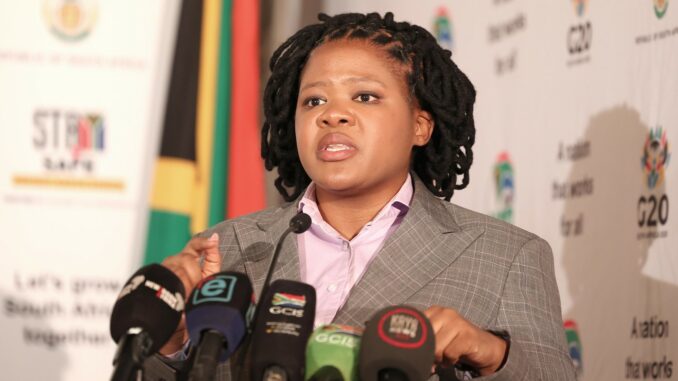
South Africa’s Presidential Youth Employment Intervention (PYEI) has recorded more than 2.6 million temporary earning opportunities since its launch in 2020, exceeding its target of 1.5 million. Deputy Minister in the Presidency Nonceba Mhlauli announced the figures in Pretoria on Wednesday, 30 September 2026, while presenting the initiative’s quarterly report for the 2026/27 financial year.
She said the opportunities had helped young people earn an income, gain experience and improve their prospects of securing sustainable livelihoods. However, she acknowledged that temporary placements alone could not resolve youth unemployment.
The programme also supports skills development, entrepreneurship and efforts to connect young people with opportunities through the National Pathway Management Network.
During the first quarter of the 2026/27 financial year, the network recorded 139,693 earning opportunities. Of these, 106,093 were secured through SA Youth, while 33,600 earning and learning opportunities came through ESSA.
Nearly 70% of the opportunities were accessed by young women. The Youth Employment Service also placed 5,244 young people in workplace experience opportunities during the quarter, helping participants develop practical skills alongside their qualifications. Meanwhile, the Revitalised National Youth Service recruited another 2,866 participants into its fifth phase, which aims to recruit 100,000 young people nationwide. Since its inception, the service has provided 140,922 paid opportunities across five phases, with women accounting for 68%.
Support for entrepreneurship also expanded. The National Youth Development Agency provided 5,214 enterprise support opportunities during the quarter, comprising 4,795 non-financial interventions and 419 financial interventions. Total enterprise support opportunities across the wider programme have reached 277,349 since inception.
Mhlauli said R95 million had been committed to the Innovation Fund’s fourth call for proposals, focusing on rural and marginalised communities, sustainable earning opportunities and greater participation by young people with disabilities.