
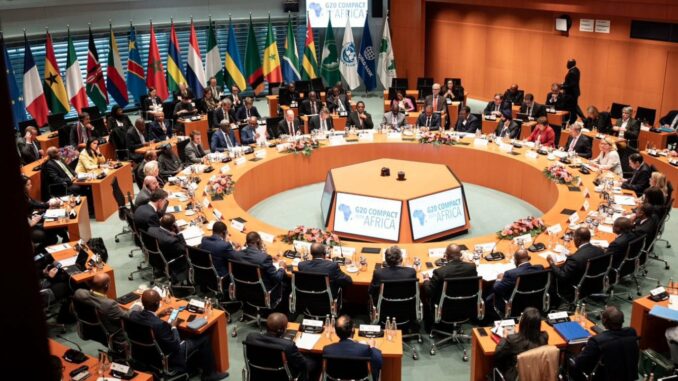
Germany has recently pledged €10 million to the G20 Compact with Africa (CwA), signaling renewed commitment to boosting private investment and sustainable growth across the continent, but experts stress that Berlin still lacks strategy and speed.
Speaking at the recent G20 Finance Track meeting in Durban, German Vice-Chancellor Lars Klingbeil said the move was a “strategic investment” aimed at creating business opportunities, easing public spending, and deepening global partnerships. Since its launch, the CwA has grown into a robust platform for reform and economic collaboration. Yet despite the pledge, experts warn that Germany’s broader approach to Africa remains slow and fragmented, especially as global rivals like China, India, and Gulf nations rapidly expand influence through trade, infrastructure, and access to critical minerals.
Trade data paints a worrying picture: German exports to sub-Saharan Africa have stagnated over the past decade, while Chinese investments soar. Critics point to Germany’s lack of strategic clarity and its failure to support firms facing financing, visa, or regulatory hurdles in African markets — while other countries have long been taking action. Business leaders argue Germany must move beyond risk-averse narratives and integrate foreign trade, development, and diplomacy. Without a long-term, coordinated Africa strategy, Germany risks missing out on vital opportunities in a continent poised for growth. To become a truly equal partner, analysts say, Germany must support local value chains and accept Africa’s evolving economic independence — even if that means paying more.