
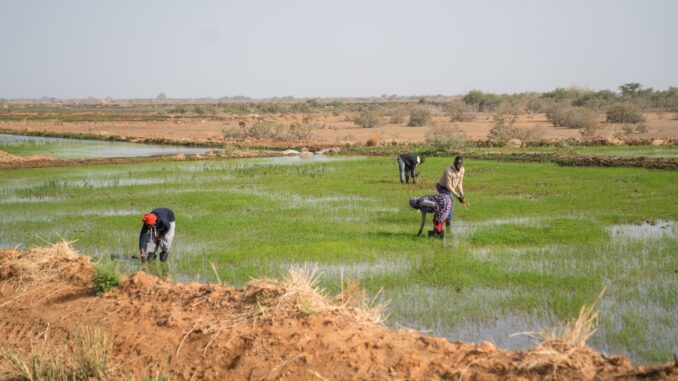
Senegal’s appetite for rice remains insatiable, with the average citizen consuming 100 kilogrammes annually, making the cereal a vital staple in daily meals.
Despite a remarkable threefold increase in production over the past decade — from 469,000 tonnes in 2012 to 1.5 million tonnes — local output still falls short of national demand.
The country continues to import 60% of its rice, predominantly from Asia, as only 40% is currently produced domestically. Major rice-growing zones, including the Senegal River Valley, Casamance, and Sine Saloum, have shown promise, but the gap between consumption and production persists.
Structural constraints are stifling the rice sector’s full potential. High production costs stem from poor mechanisation, limited irrigation infrastructure, unequal access to inputs, and delayed financing. These challenges, compounded by the impact of climate change — such as early rains that flood rice fields — have forced desperate measures, including the import of harvesters from Mauritania in 2023. In response, the government has pledged to develop 10,000 additional hectares and accelerate the provision of equipment and resources. Yet Wally Diouf, head of the national self-sufficiency programme, warns that Senegal must act swiftly and consistently if it is to meet its revised target of rice sovereignty within five years.