
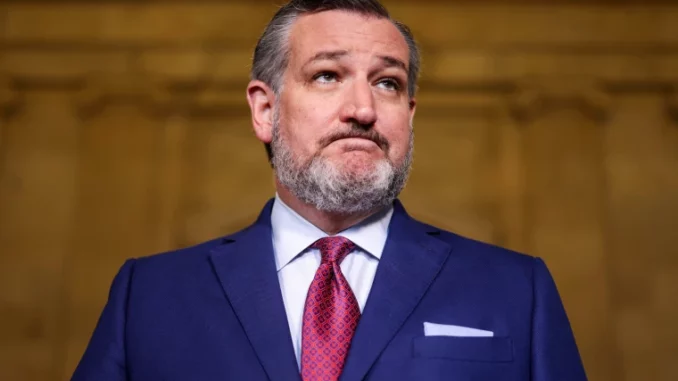
U.S. Senator Ted Cruz has sparked controversy with claims that Nigeria is witnessing a “Christian mass murder,” urging Washington to classify the West African nation as a violator of religious freedom — a move that could lead to sanctions.
The Nigerian government has strongly rejected the allegations as baseless, insisting that there is no systematic targeting of Christians. While Cruz’s proposal awaits Senate consideration, his assertions have gained traction among U.S. evangelical groups and commentators who have framed the violence as “Christian genocide,” despite the lack of verifiable evidence.
Nigeria’s security crisis, which has claimed thousands of lives, stems from a complex web of religious, ethnic, and socio-economic factors. Data from the Armed Conflict Location and Event Data (ACLED) programme reveals that from January 2020 to September 2025, there were over 11,800 attacks resulting in more than 20,000 deaths. Of these, only 385 incidents were identified as religiously motivated assaults on Christians, leading to 317 deaths, while attacks on Muslims resulted in 417 fatalities. Experts note that both Christian and Muslim communities are victims of ongoing violence driven by extremist insurgencies, resource-based farmer-herder conflicts, and communal clashes across Nigeria’s north and middle belt.
Analysts and human rights experts have dismissed Cruz’s genocide claims as misleading. They argue that Nigeria’s conflicts, though deadly and deeply concerning, do not meet the international legal threshold for genocide as defined by the United Nations.
Scholars such as Olajumoke Ayandele of New York University and Chidi Odinkalu of Tufts University emphasise that the violence is indiscriminate rather than religiously orchestrated. They caution that inflammatory narratives from abroad could exacerbate tensions. Meanwhile, Nigerian authorities continue to call for international understanding and partnership to address the broader insecurity plaguing the country.