
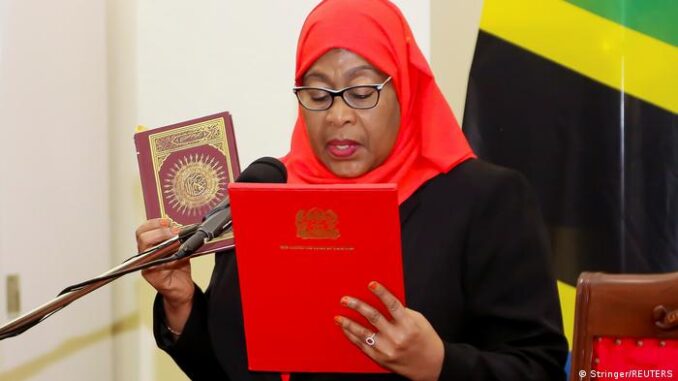
President Samia Suluhu Hassan has secured more than 97 percent of the vote in Tanzania’s highly contested election, reaffirming her leadership in a landslide seldom witnessed in the region. Tanzania’s Independent National Electoral Commission announced on Saturday, November 1, the results of the polls. Receiving her certificate of victory in Dodoma this weekend, she framed the result as a resounding endorsement of female leadership and called for national unity after a tense campaign period. She emphasized a commitment to peace and continuity, invoking the nation’s six-decade journey and urging citizens to rally behind stability and collective progress.
The electoral triumph, however, has ignited significant controversy, with critics and opposition figures describing the process as deeply flawed. Key rivals were either barred or detained, protests flared across major cities and the security forces mounted a heavy response. Reports of fatalities, arbitrary arrests and restrictions on digital platforms draw a somber shadow over the celebratory rhetoric. International observers and foreign governments have voiced deep concern, cautioning against the erosion of democratic space and urging restraint to prevent further escalation.
This outcome reinforces the dominance of the ruling Chama Cha Mapinduzi party, which has steered the nation since independence. While the party has historically balanced control with limited opposition tolerance, analysts argue the current climate signals a shift toward more pronounced authoritarianism.
The seamless succession dynamics within CCM continue to underpin Tanzania’s image as a bastion of stability. Nonetheless, beneath the calm surface of Dar es Salaam’s quiet streets, a restless yearning for political openness and youthful democratic aspiration beats, hinting at a future where today’s unity call may be tested by tomorrow’s demands for reform.