
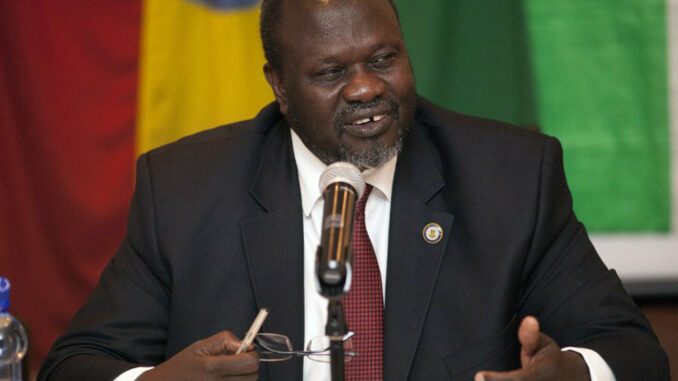
Defense lawyers on Wednesday challenged the authentication timeline of a re-submitted digital forensic report in the case of suspended First Vice-President Riek Machar and seven co-accused, arguing that discrepancies in certification dates undermine the integrity of the prosecution’s evidence.
A South African digital forensic expert re-filed the report after judges had previously deferred its submission, citing disorganization and inconsistencies in the prosecution’s documentation. The special court had earlier returned several files due to missing pagination and unclear referencing, which impeded judicial review and the defense’s scrutiny.
The court permitted the prosecution’s final witness, digital forensic expert Ratlhogo Peter Calvin Rafadi, to re-submit the exhibits to ensure procedural clarity. Lead prosecutor Ajo Ony’Ohissa apologized for the earlier irregularities, attributing them to the documents having “passed through many hands.
According to the filing, the 28-page forensic report was prepared on 16 August 2025, received by the Ministry of Justice on 26 August, and forwarded the same day to the Director of Public Prosecutions and the chair of the investigative Committee probing the Nasir incident.
The defense objected to prosecution document number 9-H, highlighting what it described as a problematic sequence of authentication.
Defense counsel Deng John Deng told the court that these certifications were issued after the case had already been registered, raising procedural concerns. He further noted the absence of authentication by the South African Embassy in Juba. Presiding judge James Alala Deng adjourned proceedings to Friday, 27 February, when the prosecution is expected to respond to the objection.
Machar, 73, is under house arrest, while his co-accused are detained at National Security Service facilities in Juba. They face charges including murder, conspiracy, terrorism, treason, destruction of public property and crimes against humanity.