
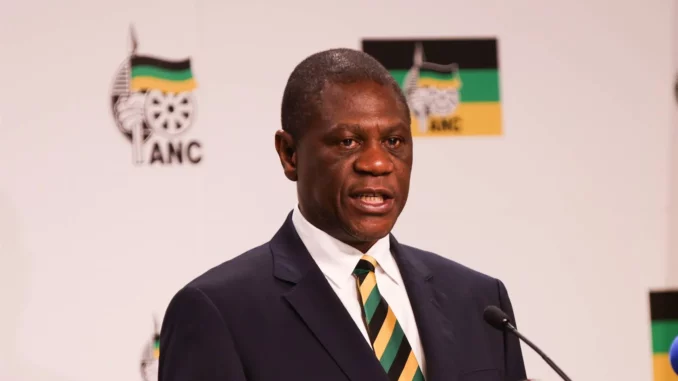
On Sunday, March 22, 2026, South Africa’s Deputy President Paul Mashatile called for a fundamental rethink of public employment programmes, stressing that they must create long-term opportunities rather than entrench dependency.
Speaking at the 2026 ‘Annual Labour School’ in Pretoria, he said the country stands at a decisive moment where policy direction and collective action will shape its economic and social future.
Mashatile urged organised labour and society to return to the foundational principles of mobilisation, education, and unity, rooted in the liberation struggle. He linked these ideals to current challenges such as global economic instability, rising inequality, and rapid technological change, emphasising the need for a unified national response.
Reflecting on South Africa’s labour history, he referenced milestones including the 1973 Durban strikes and the formation of Congress of South African Trade Unions in 1985, noting their role in advancing workers’ rights and resisting apartheid. He also acknowledged the contributions of other labour formations that continue to advocate against unemployment, inequality, and poverty.
The Deputy President highlighted the priorities of the current administration, including inclusive growth, job creation, and poverty reduction. While noting modest economic growth of 1.1% in 2025 and easing inflation to 3.0% in February 2026, he cautioned that economic gains must translate into meaningful employment.
He pointed to government initiatives such as the Presidential Employment Stimulus and ongoing reforms under Operation Vulindlela aimed at addressing structural constraints.
Mashatile further warned that technological advances, including artificial intelligence, must empower rather than displace workers. He called for stronger labour protections, expanded access to secure jobs, and a renewed role for trade unions in shaping economic policy.
Emphasising skills development and alignment between education and labour market needs, he maintained that sustainable employment remains central to restoring dignity and driving long-term national progress.