
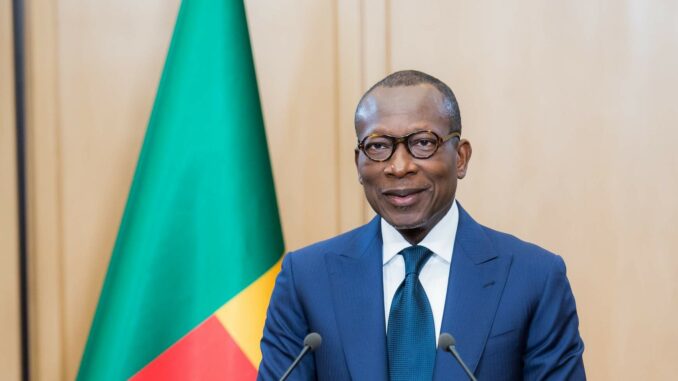
Voters in Benin are set to head to the polls on Sunday, April 12, to elect a new President, as incumbent Patrice Talon prepares to step down after a decade marked by economic gains and mounting political tensions.
Finance Minister Romuald Wadagni, widely seen as Talon’s preferred successor, is the frontrunner in the race. He faces Paul Hounkpè, the sole opposition candidate, in a contest critics say lacks genuine competitiveness.
The first round of voting is scheduled for April 12, with a run-off slated for May 10 if no candidate secures more than 50 per cent of the vote. Nearly eight million people are eligible to participate.
The election follows a parliamentary vote in January in which opposition parties failed to meet the 20 per cent threshold required to gain representation, leaving Talon’s allies in full control of the legislature.
Critics argue that electoral rules have been tightened to sideline challengers, with key opposition figures barred from contesting. Despite these concerns, Wadagni has campaigned on a strong economic record, with Benin’s economy growing by about 7 per cent last year, according to international estimates. However, the benefits of this growth have not been evenly distributed, with poverty persisting in rural and northern regions.
Rights groups have accused the government of restricting dissent, citing arrests, limits on public demonstrations and pressure on independent media. Recent constitutional reforms extending presidential terms and raising barriers for opposition participation have further deepened these concerns.
Security remains a pressing issue, particularly in the north, where extremist violence spilling over from neighbouring Burkina Faso and Niger has intensified. Last year, an attack on military posts killed 54 soldiers.
The fragile security climate has also been underscored by a failed coup attempt in December, reflecting broader instability across parts of West Africa.
While some voters credit Talon with driving development, others remain sceptical about the credibility of the electoral process. Key concerns among the electorate include inequality, democratic freedoms and access to basic services such as healthcare, education and jobs. Analysts suggest that in a climate of uncertainty, many voters may favour continuity, potentially strengthening the governing party’s position as the country navigates a delicate political and security landscape.