
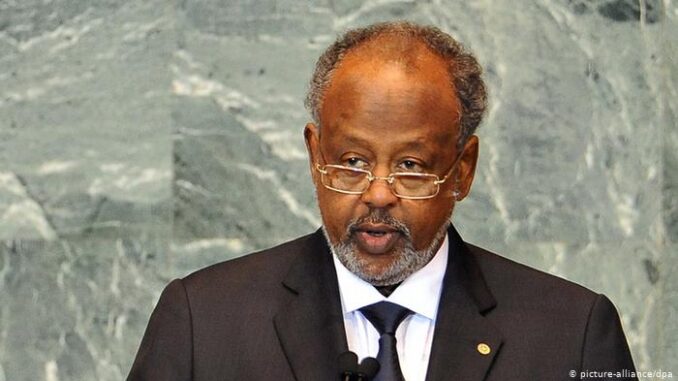
Voters in Djibouti are heading to the polls on Friday, April 10, to elect a President in a race widely seen as lacking suspense, with incumbent Ismaïl Omar Guelleh seeking a sixth term in office.
The 78-year-old leader, who has ruled since 1999, is contesting the election following a 2025 constitutional reform that removed the age limit of 75 for presidential candidates. His only challenger, Mohamed Farah Samatar, represents a party with no seats in parliament.
Observers and opposition figures have criticized the contest as largely symbolic, arguing it is designed to avoid an uncontested race. Prominent opposition leader Daher Ahmed Farah was barred from running, while several opposition parties lack legal recognition and have called for a boycott.
The election follows years of entrenched political control, reinforced by earlier constitutional changes in 2010 that removed term limits, enabling Guelleh to extend his rule through successive re-election. On the campaign trail, Guelleh has emphasized stability amid regional tensions, while Samatar has focused on reform, particularly in education and the economy.
Economically, Djibouti remains heavily reliant on its strategic location along one of the world’s busiest maritime trade routes. The country’s port-driven economy—anchored by the Doraleh port—accounts for around 70 per cent of GDP and handles about 92 per cent of neighbouring Ethiopia’s trade.
However, this growth has been underpinned by significant borrowing. Since 2022, the International Monetary Fund has classified Djibouti as a high-debt country, with China holding more than half of its public debt and maintaining a military presence in the country as part of its broader Belt and Road Initiative.