
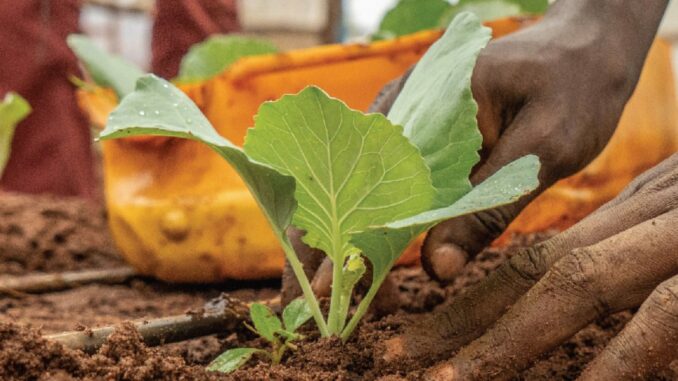
The Government of South Sudan and the International Fund for Agricultural Development (IFAD) have launched a $41.8 million agricultural program aimed at improving food security and strengthening the livelihoods of more than 100,000 people across four counties.
The Sustainable Agriculture Development Program (SADEP), alongside the Strengthening Adaptation through Institutional Building and Resilient Livelihoods in South Sudanese Agro-Pastoral Landscapes (SABRELA) project, will run for seven years in Terekeka, Mundri West, Mvolo and Bor counties.
The initiative will focus on climate-smart agriculture, fisheries, nutrition, market access and building resilience against climate change, while supporting South Sudan’s efforts to reduce reliance on imported food.
Minister of Livestock and Fisheries Onyoti Adigo Nyikwac said the programme would help transform agriculture from subsistence farming into a productive, commercial and market-oriented sector, creating opportunities for innovation, entrepreneurship and employment.
IFAD Country Director for South Sudan and Eritrea Caroline Mwongera described SADEP as one of the organization’s largest recent investments in the country, saying it would support rural communities through improved agricultural practices, stronger institutions and better access to markets.
The accompanying SABRELA project, funded by the Global Environment Facility (GEF), will focus on strengthening natural resource governance and helping communities cope with climate-related challenges such as floods and droughts.
Officials and implementing partners said the programme represents a shift from humanitarian assistance towards sustainable agricultural development, with the aim of improving food production, rural incomes and resilience among farming communities.