
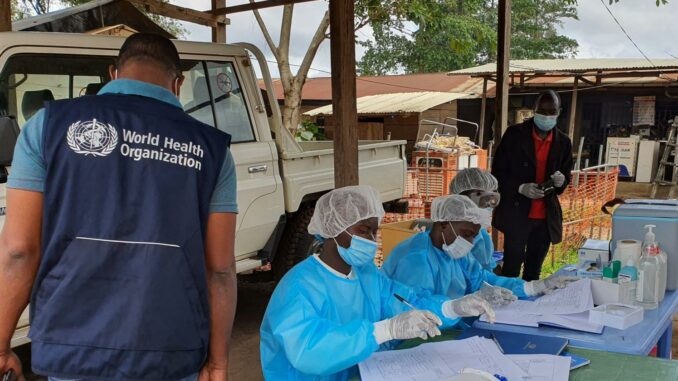
The World Health Organization (WHO) says the fast-growing Ebola outbreak in eastern Democratic Republic of Congo began in February 2026, nearly three months before it was officially declared on May 15.
WHO’s Regional Director for Africa, Dr Mohamed Yakub Janabi, said on Monday, August 10, that genetic sequencing showed the outbreak had started earlier, with some initial cases mistakenly attributed to diseases such as malaria and typhoid.
The outbreak has since recorded about 4,200 confirmed cases and more than 1,900 deaths, according to the latest government figures, making it the fastest-growing Ebola outbreak on record. The outbreak is being driven by the rare Bundibugyo virus, for which there are currently no approved vaccines or treatments. Early testing for the more common Ebola virus contributed to delays in identifying the strain.
WHO said the global risk of the virus spreading remains low because Ebola is not transmitted through the air. Cases detected outside the affected region have so far been identified and contained without sustained transmission.
However, health authorities are struggling to contain the outbreak amid conflict, unpaid health workers, misinformation and shortages of protective equipment. WHO officials say between 60 and 70 per cent of new cases are being detected outside monitored contacts, highlighting the speed at which the virus is spreading.
The outbreak is centered in one of DR Congo’s most remote and vulnerable regions, where years of armed conflict have already severely restricted access to healthcare. The current outbreak has killed people at a faster rate than previous Ebola outbreaks, including the 2014–2016 West Africa epidemic, which claimed more than 11,000 lives.