
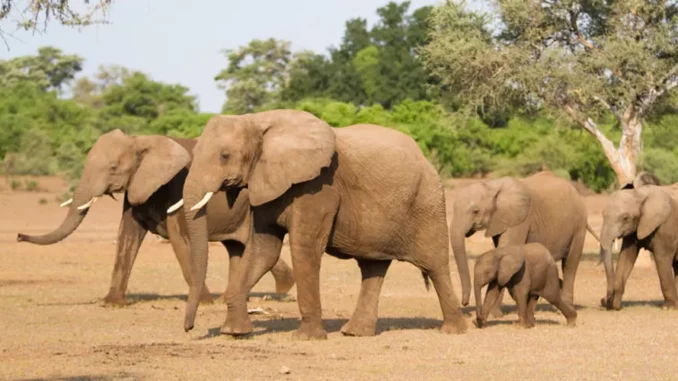
Animal rights activists have criticised Botswana’s decision to authorise the killing of 23 elephants to provide meat for celebrations marking the country’s 60th anniversary of independence from Britain on Wednesday, 30 September.
A licence issued by the Ministry of Environment and Tourism, seen by local media, approved the hunting of the elephants and other wild animals for “complimentary purposes”. The elephants were allocated to eight districts for the nationwide festivities.
The Botswana-based Elephant Protection Society warned that the decision could undermine conservation and encourage poaching by suggesting that killing elephants is acceptable when sanctioned by the Government. Its chairman, Oaitse Nawa, told the BBC that elephants needed stronger protection, citing the disruption hunting causes to their social structures.
Some residents also questioned the choice of meat. Tshenatshe Monwela, an elder in the north-western tourism town of Maun, told local media that his community should have received buffalo instead, highlighting elephants’ cultural and ecological importance.
Other concerns centred on the distribution of the meat. In Chobe district, MP Simasiku Mapulanga criticised arrangements after residents reportedly collected portions directly from an elephant carcass at a school.
He urged organisers to package the meat in portions of 5kg or 10kg to improve hygiene and ensure elderly people, pregnant women and people with disabilities could receive their share. By Wednesday morning, it remained unclear how many of the 23 elephants had been killed. However, local media published photographs showing residents gathering around carcasses and sharing meat. The BBC said it had requested a government response.
Botswana has more than 130,000 elephants, the world’s largest population. Communities living alongside them have repeatedly complained about crop destruction, property damage and fatal encounters.
The Government maintains that regulated hunting helps manage human-wildlife conflict and generates revenue for conservation and community development. Botswana banned trophy hunting in 2014 under former President Ian Khama, but his successor, Mokgweetsi Masisi, lifted the restrictions in 2019. Hunting has continued under President Duma Boko, who won the 2024 elections.
Conservation organizations continue to question the sustainability of the policy, while its supporters argue that international criticism often overlooks the burden on rural communities living alongside elephants.