
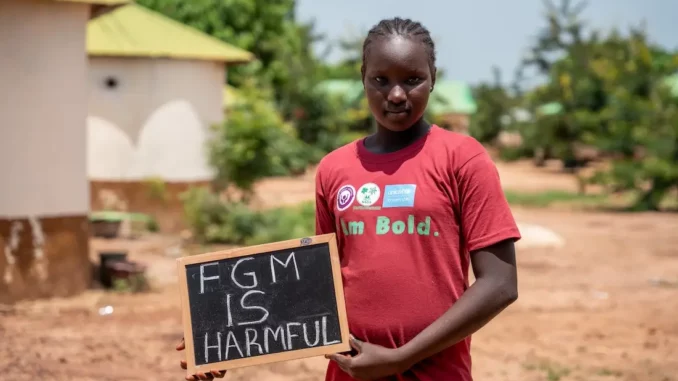
The death of a one-month-old girl in The Gambia, reportedly after undergoing female genital mutilation (FGM), has ignited national outrage and calls for stronger enforcement of the country’s anti-FGM laws.
The infant, from Kombo North District, was rushed to a Banjul hospital after severe bleeding but was declared dead on arrival. While the cause of death is yet to be confirmed by autopsy, many—including advocacy group Women In Leadership and Liberation (WILL)—have condemned the act as a clear form of violence. Two women have been arrested in connection with the case.
FGM has been banned in The Gambia since 2015, with penalties ranging from fines to life imprisonment if a victim dies, yet enforcement has been weak, with only two prosecutions and one conviction since the law’s enactment. Campaigners, including WILL founder Fatou Baldeh, have expressed concern over a rise in the cutting of babies, citing parents’ belief that younger victims heal faster and that the practice is easier to conceal. Despite the ban, The Gambia has one of the world’s highest FGM rates, affecting 73% of women and girls aged 15–49, many before the age of six.
The case has revived debate in the country, where a vocal lobby continues to push for decriminalisation despite parliament rejecting such efforts last year. Advocates and lawmakers, including Kombo North MP Abdoulie Ceesay, are urging the tragedy to serve as a turning point in protecting children from harmful traditions. The incident underscores the ongoing struggle between entrenched cultural practices and human rights protections in the West African nation.