
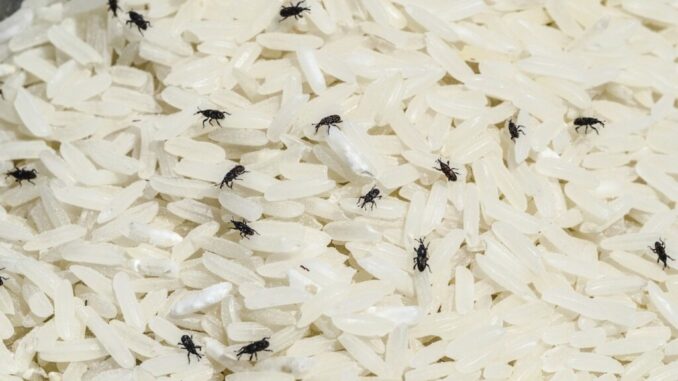
South African scientists are turning to tiny black weevils to combat the spread of Salvinia minima, an invasive aquatic fern from South America that is choking rivers and dams across the country’s northern provinces.
The pests, imported from Louisiana with support from U.S. researchers, feed exclusively on the plant, damaging its tissues and causing it to sink. Pilot projects are underway at Hartbeespoort Dam, a key irrigation and recreation site, where the invasive fern has disrupted boating, fishing, and aquatic ecosystems.
The fast-growing plant, which thrives on high nitrate levels, has already caused two major growth spurts in recent years, depleting oxygen levels in the water and threatening fish, crabs, and other aquatic life. Scientists say Salvinia is compounding South Africa’s fragile freshwater supply, particularly in Gauteng province, where Johannesburg and Pretoria rely heavily on dams already strained by rising demand and poor infrastructure. For residents, what once seemed like a harmless floating fern has turned into a costly menace, damaging boats and harming livelihoods.
While the weevils are expected to provide a natural, targeted solution, experts caution about unintended consequences. Some warn that removing the invasive plants without addressing sewage leaks and fertiliser runoff could create space for toxic cyanobacteria, or blue-green algae, to bloom. These organisms already affect nearly 60 percent of South Africa’s dams, threatening public health and water quality. Long-term solutions, researchers argue, will require parallel investments in wastewater management and agricultural reform.
This is not South Africa’s first experiment with biological control. In the 1930s, insects were successfully introduced to contain invasive Mexican cacti that threatened local ecosystems. Scientists remain cautiously optimistic that weevils can repeat that success against Salvinia minima, but stress that without tackling deeper water pollution challenges, the battle for South Africa’s rivers and dams may remain an uphill struggle.