
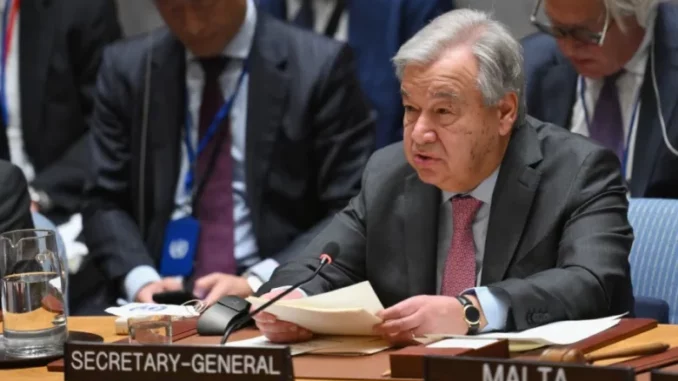
United Nations Secretary-General António Guterres has reiterated calls for a realistic and compromise-based approach to resolving the Western Sahara dispute in his latest report to the Security Council, as international support for Morocco’s autonomy initiative continues to expand.
The report, covering developments through October 2025, emphasizes the necessity of solutions grounded in realism and compromise, aligning with Security Council Resolution 2703. Personal Envoy Staffan de Mistura has maintained this position throughout diplomatic engagements, reflecting growing international consensus around Morocco’s 2007 autonomy proposal.
The document confirms explicit backing from France and the United Kingdom for Morocco’s plan, deemed “the most credible, viable, and pragmatic basis” for achieving a durable political solution, with Paris communicating this stance in July 2024 and London in June 2025.
The autonomy initiative, presented to the UN in 2007, proposes self-governance for the region under Moroccan sovereignty. Multiple Security Council resolutions have acknowledged the proposal as serious and credible, with increasing international recognition marking a significant diplomatic shift.
Notably absent from Guterres’ assessment is any mention of a referendum on self-determination, signaling departure from a framework that has proven unworkable for decades. This evolution reflects geopolitical realism and recognition of the autonomy plan’s viability as the primary path toward resolution.
De Mistura’s diplomatic efforts have received broad support from Security Council members during briefings in October 2024 and April 2025. The envoy maintains regular contact with all parties including Morocco, Algeria, Mauritania, and permanent Security Council members, representing the most sustained mediation push in years.
The report documents Morocco’s continued development of the southern provinces, including infrastructure investments and population growth from 450,000 to 600,000 residents since 2014, demonstrating effective territorial administration and economic development initiatives.