
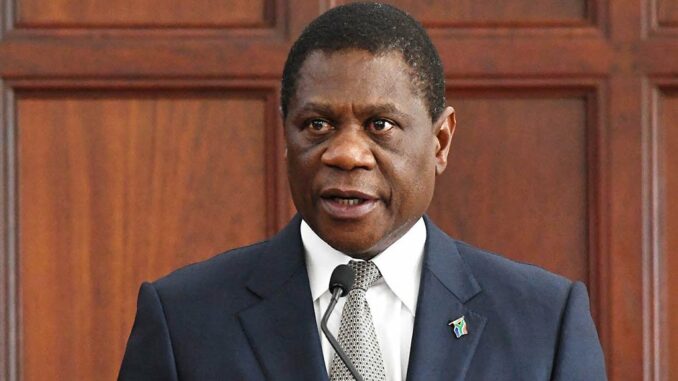
Deputy President Paul Mashatile has urged immediate and coordinated action to tackle South Africa’s growing water and sanitation challenges.
Speaking at the Association of Water and Sanitation Institutions of South Africa (AWSISA) dialogue at Emperors Palace on Monday, November 10, he emphasised that sustainable investment in infrastructure and integrated management is critical to securing the nation’s water future.
He highlighted that South Africa, with annual rainfall averaging just 497 millimetres, faces worsening scarcity due to climate change, deteriorating infrastructure, and inefficient municipal management. The Deputy President noted that water losses, including leaks and illegal connections, reach as high as 50 percent in some regions, costing the economy billions of rand annually.
Mashatile said government reforms were underway to address the crisis, including the Water Resources Infrastructure Agency Act to centralise infrastructure oversight and financing. He also cited the National Water Safety Management Programme, which seeks to train an additional 15,000 skilled water professionals by 2030 to strengthen governance and improve service delivery.
As urbanisation and population growth drive higher demand, he underscored the urgency of adopting efficient systems that align with the UN Sustainable Development Goals for clean water and sanitation. He further encouraged transparent public-private partnerships to mobilise capital for large-scale infrastructure renewal under the National Water Resource Strategy III.
The Deputy President called on African nations to unite behind the Africa Water Vision 2063, which aims to shift from fragmented responses to collective regional action. He stressed that safeguarding water resources requires deliberate steps to reduce consumption, enhance recycling, and promote rainwater harvesting. Mashatile concluded by urging leaders to prioritise access for vulnerable groups, particularly women and children, saying that equitable water access underpins public health, social justice, and community development. “Together, we can build a future where water is not a privilege, but a fundamental human right for all,” he affirmed.