
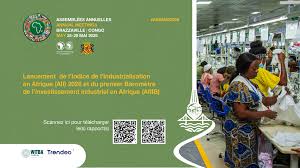
Morocco has become Africa’s leading industrial economy, overtaking South Africa, according to the 2025 edition of the African Industrialization Index (AII), launched this week in Brazzaville by the African Development Bank Group (AfDB), on the sidelines of its 2026 Annual Meetings being held from May 25 to 29 in the Republic of the Congo.
The 2025 AII, which assessed industrial development across all 54 African countries during the 2010–2024 period, highlights Morocco’s sustained industrial upgrading, export diversification, and strong industrial policy, all of which have been praised by continental institutions.
The report notes that South Africa remains a major industrial power on the continent, but its competitiveness has been steadily declining in the face of emerging new industrial hubs.
At the continental level, the document points to significant disparities. North Africa and Southern Africa dominate production and export sophistication, while East, West, and Central Africa still lag behind in terms of industrialization.
The 2025 AII was unveiled alongside another report, the African Industrial Investment Barometer (AfIIB), developed by WITBA Invest SA in partnership with Trendeo.
The AfIIB, which examines African industrialization through three indices (industrial diversification, attractiveness, and productive integration), measures the degree of local integration of investments. It indicates that North Africa ranks first across all three categories, attracting 56% of cumulative continental investment between 2020 and 2025, with Morocco and Egypt leading the way.
According to the AfDB, the AII and AfIIB provide the most detailed picture to date of the countries industrializing the fastest, the destinations attracting investment, and the value generated that remains on the continent.
The two reports reportedly share the same diagnosis: Africa’s industrial integration remains weak. Intra-African trade accounts for only 14.4% of total trade, reflecting fragile regional production links and fragmented industrial ecosystems.
According to Harouna Kaboré, President of WITBA Invest SA, “The continent’s real deficit is no longer the absence of industrial strategies. Africa is now producing them in abundance. What is still lacking is execution discipline, continuity in public policies, and systemic coherence between financing, energy, infrastructure, human capital, governance, and industrial vision.”