
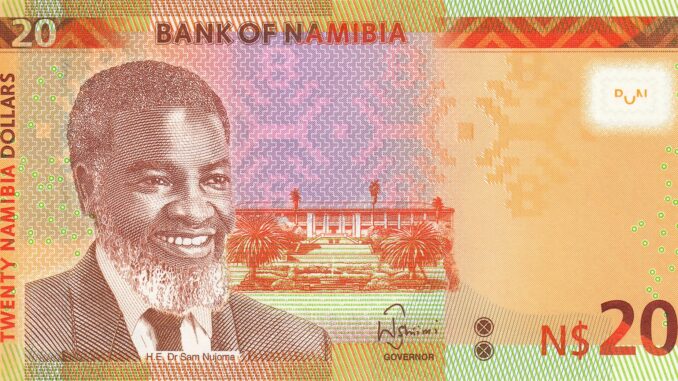
Namibia’s Central Bank on Wednesday, August 12, kept its benchmark repo rate unchanged at 6.75%, citing weak domestic economic activity, rising inflationary pressures and the need to protect the country’s currency peg.
Bank of Namibia Governor Ebson Uanguta said the decision would help support international reserves and maintain the one-to-one peg between the Namibia dollar and the South African rand.
The bank said economic activity remained subdued during the first half of 2026, with mining, manufacturing, electricity generation and transport recording weak performance. Agriculture and wholesale and retail trade, however, improved.
Annual private-sector credit growth slowed to 4.5% in June, largely due to weaker borrowing by businesses. At the same time, headline inflation increased to 4.4% in June, from 4.1% in May, mainly because of higher transport costs.
Namibia’s merchandise trade deficit also widened to N$19.3 billion (about $1.2 billion) in the first half of 2026, up from N$12.8 billion during the same period in 2025, driven largely by increased payments for mineral fuel imports.
Despite the pressures, international reserves increased to N$57.1 billion at the end of July, providing an estimated 3.5 months of import cover. The central bank said the reserves were sufficient to support the currency peg and meet the country’s international financial obligations.