
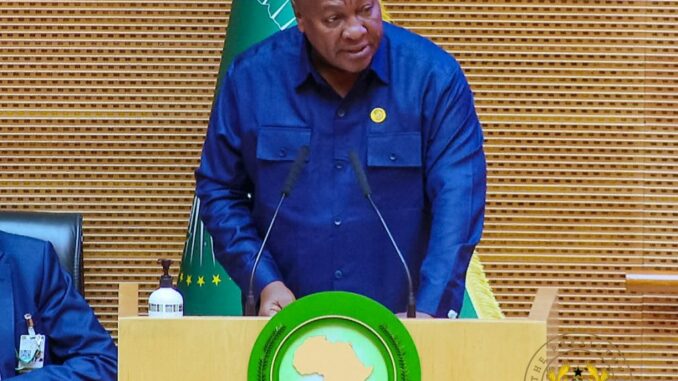
Ghana has opened a three-day international Summit in Accra aimed at advancing global discussions on reparations linked to slavery and colonialism, as the movement gains renewed momentum, following a recent United Nations resolution recognising slavery as one of the gravest crimes against humanity.
The Summit, which began on Wednesday, June 17, brings together experts, Government ministers and Heads of State to define the next phase of a long-running campaign seeking justice, restitution and redress for historical injustices.
According to organizers, the first day is dedicated to technical discussions on developing a shared framework for reparations, while high-level political engagement is expected to intensify on Thursday and Friday.
The agenda extends beyond financial compensation, encompassing proposals such as restitution of cultural artefacts, educational initiatives, formal apologies from former colonial powers, and investment-driven development support for affected regions. President John Mahama, a leading advocate of the initiative within the African Union framework, has emphasised that reparations also speak to broader issues of global equity, including Africa’s representation in international governance structures such as the United Nations Security Council.
Participants at the summit argue that the legacy of slavery continues to shape present-day inequalities, structural discrimination, and economic disparities between Africa and its diaspora.
Ghana’s symbolic role as host is rooted in its historical connection to the transatlantic slave trade, with sites such as Cape Coast and Elmina castles serving as enduring reminders of the forced deportation of millions of Africans to the America. Officials describe Ghana as both a “crime scene” and a potential “place of restoration and healing,” reflecting its evolving diplomatic leadership on reparative justice.
The Conference is widely seen as a strategic effort to convert decades of advocacy into a structured global roadmap, with calls for measurable commitments and sustained international cooperation.