
On Sunday, July 5 2026, the Angolan Government has outlined an ambitious human resource development agenda in the health sector, aiming to train approximately 38,000 health professionals by 2028 as part of its broader drive towards universal health coverage.
The initiative, anchored in the National Health Training Project under the Human Resources Training Project for Universal Health Coverage, is designed to strengthen clinical capacity, improve service delivery, and reduce reliance on external medical expertise.
According to project officials, more than 17,000 health workers have already been trained, with around 800 professionals currently undergoing specialised training in Brazil through a technical cooperation framework between Angola and Brazil. The programme is expected to deliver 80% of training locally, while the remaining 20% will be conducted abroad to enhance advanced skills transfer.
The initiative also includes collaboration with international partners such as the Brazilian Cooperation Agency, Ebserh, Brazil’s Ministry of Health, and the Oswaldo Cruz Foundation, reinforcing a structured exchange of expertise.
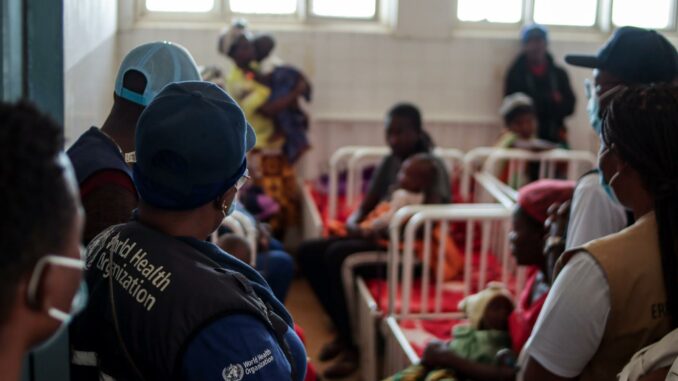
During field assessments conducted by a technical mission, gaps in staffing were highlighted at key health facilities serving large populations. These include shortages of doctors and nurses, as well as high patient demand, underscoring the urgency of scaling up the health workforce.
Hospital administrators further emphasised operational pressure, including heavy daily patient inflows and high numbers of annual deliveries and consultations, reinforcing the need for sustained investment in human capital. The programme forms part of Angola’s broader health sector reform agenda, which prioritises workforce expansion, infrastructure development, and improved access to care.