
Casablanca’s city government signed concession contracts for a 15 billion dirham waste-to-energy complex in Mediouna, marking a decisive step toward one of Morocco’s most significant environmental infrastructure projects.
The 33.5-year concession, which includes the construction phase, is held by an international consortium led by Swiss-Japanese group Kanadevia Inova alongside Moroccan firm Nareva and Japan’s Itochu, which will take a stake in the project company, Al Beida Clean Power, through its British subsidiary. Power purchase agreements have also been signed with national utility ONEE and regional operator SRM Casablanca-Settat to secure demand for the electricity produced.
The facility will incinerate roughly 1.5 million tons of Casablanca’s municipal solid waste each year, generating an estimated 115 megawatts of electricity, supplemented by a 4 megawatt biogas plant capturing landfill methane and a 50 megawatt solar plant built on reclaimed land, enough combined capacity to supply electricity to about a quarter of the city’s population.
Kanadevia Inova’s chief executive told Reuters that construction, to be carried out by Moroccan firm Somagec, should begin before year-end and take around three and a half years, with waste treatment and power generation potentially starting six to ten months before full completion; the plant is expected to be fully operational by mid-2030 using entirely local financing.
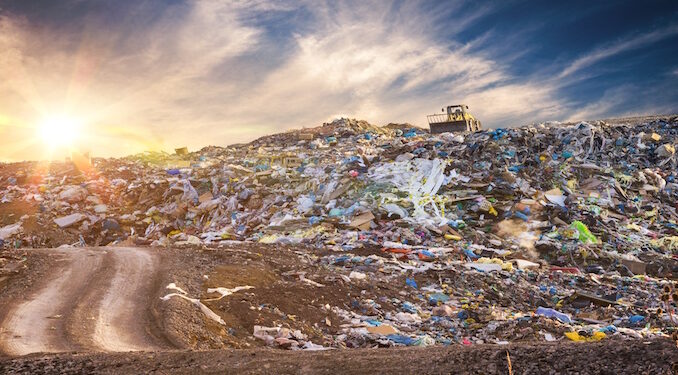
The project also includes managing Mediouna’s environmental legacy, including closing and rehabilitating the old landfill, whose waste piled up to nearly 70 meters, part of which has already been transformed into a 40-hectare green space.