
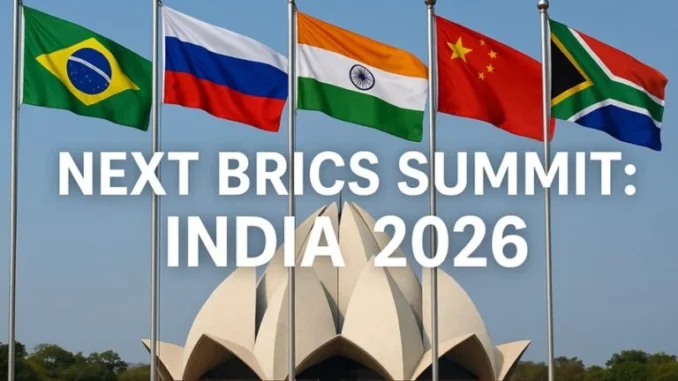
The 18th BRICS Summit concluded in New Delhi, India, on September 13, 2026, with leaders adopting the New Delhi Declaration, which seeks to deepen cooperation and advance a more representative global governance system.
Ethiopian Prime Minister Abiy Ahmed, who participated in the summit, called for stronger cooperation within BRICS and deeper engagement with Africa. He said the bloc could better connect its capital, technology and markets with the resources and economic opportunities available across member and partner countries.
Abiy Ahmed also highlighted Ethiopia’s readiness to expand cooperation in minerals, renewable energy and manufacturing, while promoting economic transformation, resilience and climate action.
During a closed session on “Inclusive Global Governance and Strengthening Multilateralism,” BRICS leaders discussed reforms to the United Nations system, international financial architecture and multilateral trading system, amid demands from the Global South for greater representation in international decision-making.
On the sidelines, Abiy held bilateral talks with several leaders, including Indian Prime Minister Narendra Modi, Iranian President Masoud Pezeshkian, Malaysian Prime Minister Anwar Ibrahim, Russian President Vladimir Putin and Chinese President Xi Jinping. The discussions covered investment, trade, technology and regional affairs.
The Summit also brought together business leaders and investors through platforms including the BRICS Business Council and BRICS Women’s Business Alliance, with discussions focused on expanding trade and investment among participating economies.
Held under India’s presidency from September 12 to 13, 2026, the summit was organised under the theme, “Building for Resilience, Innovation, Cooperation and Sustainability.”
The declaration reaffirmed BRICS’ commitment to sovereign equality, solidarity, inclusiveness, collaboration and consensus, while outlining priorities for economic cooperation, sustainable development and reforms to international institutions.