
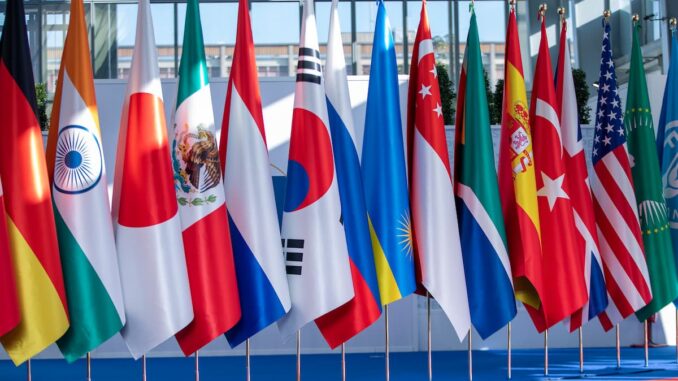
South Africa has intensified security preparations ahead of the G20 Summit set to open on Saturday, 22 November 2025, deploying 3,500 additional police officers and placing Army units on standby under the National Joint Operational and Intelligence Structure.
A high-profile parade involving helicopters, K-9 units and motorcycle officers was staged on Wednesday, November 19 in Johannesburg as authorities prepared for widespread protests.
Police leaders, including Lt. Gen. Tebello Mosikili, confirmed that demonstrations are expected across major cities, though only within designated areas near the summit venue. Airports have also introduced “speakers’ corners” where protesters will be redirected should they stage demonstrations during leaders’ arrivals.
A diverse range of groups — from climate activists and anti-capitalist networks to women’s rights advocates and anti-immigration organisations — are planning to use the global event to amplify their concerns. Tensions have been heightened by a controversial billboard campaign from the Afrikaner trade union Solidarity, challenging the country’s affirmative action laws and sparking diplomatic friction with the United States. Washington has already signalled its disapproval, with President Donald Trump boycotting the summit over unfounded allegations of anti-white sentiment in South Africa. Meanwhile, Women for Change has called for a nationwide shutdown on Friday to protest the country’s alarming rates of femicide, while anti-migrant groups and climate justice coalitions have announced parallel activities, including an alternative summit.
Alongside the security measures, Johannesburg authorities have embarked on an extensive cleanup and repair operation to revitalise infrastructure ahead of the international gathering. President Cyril Ramaphosa personally joined efforts in Soweto last week, helping workers confront longstanding challenges such as potholes, broken streetlights and unreliable utilities. However, many residents have criticised the multi-million-dollar facelift as a cosmetic intervention that does little to address the city’s structural decay. For some, the summit represents a moment of global prestige; for others, it is a costly spectacle that offers little tangible benefit to ordinary citizens grappling with daily hardship.