
In a forward-looking Policy dialogue unfolding in South Sudan, authorities and conservation experts have opened, on Wednesday, May 20, high-level discussions in Juba City aimed at ensuring that the country’s ambitious infrastructure expansion does not compromise one of the world’s most significant wildlife migration systems.
The engagement, convened at a technical workshop on ecologically sensitive infrastructure planning, brought together government ministries, development specialists, and conservation organizations as South Sudan advances plans to expand roads, railways, energy networks, pipelines, and digital connectivity.
Officials from the Ministry of Lands, Housing and Urban Development emphasized that while infrastructure remains central to national development and regional integration, it must be pursued within a framework that safeguards environmental integrity.
They underscored that roads, electricity transmission lines, water pipelines, fibre optic networks, and oil corridors form the backbone of economic transformation, connecting communities to essential services such as markets, schools, and healthcare. However, they cautioned that development must remain environmentally responsible and strategically planned.
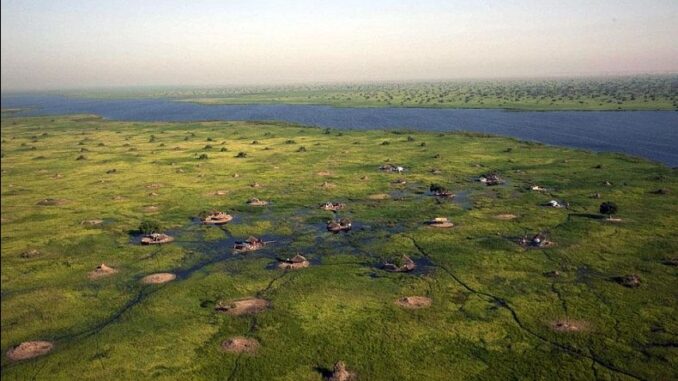
From the conservation front, the Ministry of Wildlife, Tourism and Conservation warned that poorly designed infrastructure could fracture fragile ecosystems, disrupt ancient migration routes, and intensify human–wildlife conflict. Officials highlighted that the country hosts vast wetlands and critical habitats, including what is described as the largest terrestrial mammal migration on the planet.
Development partners, including African Parks, urged stronger inter-ministerial coordination, noting that overlapping land uses—such as roads cutting through protected areas and communities residing within conservation zones—remain a recurring governance challenge.
Meanwhile, the South Sudan Roads Authority outlined several priority corridors under development, including the Kapoeta–Boma route, the Pagak–Palouch road, and the Bor–Malakal–Renk highway. Officials acknowledged that many of these projects traverse wetlands and floodplains, making rigorous environmental assessments indispensable.
Industry experts and policymakers at the workshop advocated mitigation measures such as wildlife crossings, speed regulation systems, and enhanced protection of riverine and floodplain ecosystems during construction.
The consensus emerging from the dialogue was clear: South Sudan stands at a pivotal development crossroads, with leaders framing the moment as an opportunity to “build correctly the first time,” embedding ecological stewardship into the foundation of national infrastructure planning.