
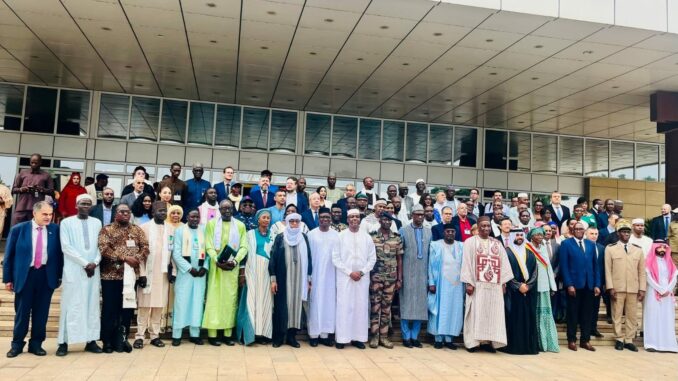
The first edition of the Pan-African Media Forum is held in Bamako June 3-6 under the theme “Uniting Voices, Strengthening Ties Among African Media.” The event aims to establish an institutional, pan-African framework for dialogue among media professionals from Mali, the Alliance of Sahel States (AES), and other regions across the continent.
This continental platform for strategic exchange brings together policymakers, journalists, researchers, regulatory bodies, influencers, and heads of public and private media and features Morocco as the Guest of honor. Participants will collaboratively address the challenges tied to the evolution of journalism in Africa and the shifting media landscape in the era of digitalization, artificial intelligence (AI), and social networks.
Discussions will also focus on combating disinformation, fostering cooperation among African media outlets, and improving the training and protection of media professionals on the continent.
The conclave seeks to enhance the professional capacities of journalists and media actors as they navigate digital transformations, new production tools, and the rigorous demands of modern reporting.
In his opening remarks, Malian Prime Minister Abdoulaye Maïga highlighted the forum as a critical space for reflection, exchange, and proposals regarding the issues shaping the future of information in Africa. He noted that the event’s scientific, educational, and forward-looking dimensions make it a particularly relevant initiative.
“Technological revolutions have profoundly transformed the ways information is produced, disseminated, and consumed,” Maïga said during the opening ceremony, which was attended by Moroccan Ambassador to Mali Driss Isbayene and other Malian and foreign dignitaries.
Maïga added that digital technology, social media, and AI offer unprecedented opportunities to inform, educate, bridge divides among peoples, and promote access to knowledge.
Mastering both the national and continental narrative, he argued, is now a major strategic imperative. Informational sovereignty is emerging as a core pillar of state sovereignty and a fundamental lever for stability, development, and international influence.
“The challenge that brings us together today is precisely that of Africa’s informational sovereignty, grounded in the ability of Africans to independently produce, analyze, and disseminate rigorous, balanced information that faithfully reflects their reality,” the Malian Prime Minister continued.
The forum ultimately aims to establish a permanent pan-African space for media consultation. It also plans to build the skills of at least 250 media professionals through a series of panels, practical workshops, and technical sessions.
The agenda features key panels addressing topics such as “Information Warfare: How to Build a Sovereign African Narrative,” “Media Cooperation: Resource Sharing and Solidarity Among African Media,” and “The Challenge of Information in Times of Crisis and Conflict.” Additional roundtables will focus on the professional, social, and economic protection of media in Africa, alongside discussions on the intersection of media, social networks, and artificial intelligence.