
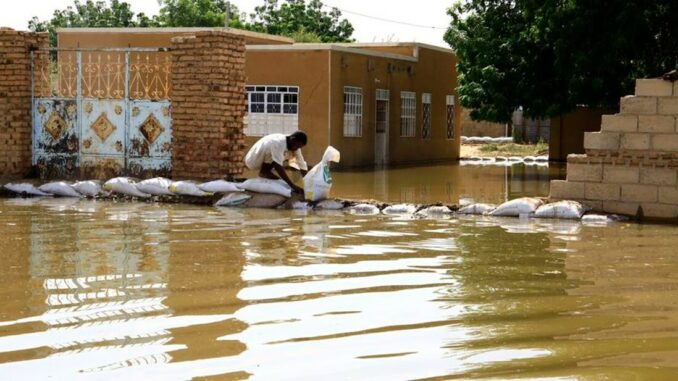
Sudan’s Ministry of Agriculture and Irrigation has urged residents living along the banks of the Nile River to take immediate precautions to protect their lives and property as water levels continue to rise.
This Tuesday, river levels surpassed flood stage thresholds in six states — Blue Nile, Sinnar, Gezira, Khartoum, River Nile, and White Nile — prompting heightened warnings.
Authorities declared a state of maximum emergency on Monday following record water level increases, issuing a red alert for widespread flooding along the Nile strip. Residents in flood-prone areas have begun erecting sandbag barriers and retrieving belongings by boat, particularly in Bahri city, north of Khartoum, where villages have already been inundated. The government has intensified monitoring across all major stations to prevent further loss of life and property as the Nile continues to swell.
Flooding is a recurring annual challenge in Sudan, typically occurring between June and October. In recent years, heavy rainfall and weakened infrastructure — much of which has been damaged by the ongoing civil conflict between the Sudanese Armed Forces and the Rapid Support Forces since April 2023 — have compounded the humanitarian toll. The war has killed tens of thousands and displaced millions, leaving communities even more vulnerable to seasonal disasters like the current flooding crisis.
Experts link Sudan’s record Nile floods to climate change, GERD water release, and weakened embankments