
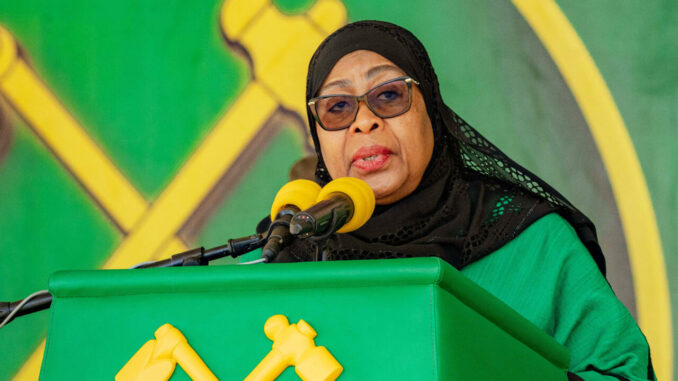
Tanzanian President Samia Suluhu Hassan has begun her second term under a cloud of controversy, sworn in on November 3, amid heavy security at a closed military venue in Dodoma.
The ceremony followed an election in which she secured 98% of the vote after opposition figures were jailed or barred, prompting observers to decry the process as undemocratic and marred by intimidation.
A nationwide internet blackout and widespread reports of violence, with opposition groups alleging as many as 800 deaths, have intensified scrutiny of the electoral process and Tanzania’s political direction.
International bodies, including the UN and the EU, voiced alarm over credible reports of killings, detentions, and suppression of dissent.
Regional observers from SADC stated voters in many areas were unable to exercise their democratic rights, citing restrictions on opposition activities and suspected ballot manipulation. Ordinary citizens have reported missing relatives, financial hardship, and limited mobility, as unrest disrupted transport, doubled food and fuel prices, and forced schools and institutions to shut. Accounts shared with the BBC highlighted distressing uncertainty, hunger, and the emotional toll on families unable to trace loved ones since polling day.
President Samia acknowledged the violence as a stain on Tanzania’s reputation but defended the election’s conduct, while accusing foreign nationals of fomenting unrest. With key opposition parties calling for a fresh vote and rejecting the results as illegitimate, the political atmosphere remains fraught, threatening social cohesion and economic stability. As the nation stands at a crossroads, the leadership faces a critical test: restore public trust and normalcy, or risk deepening civic mistrust and international isolation. In moments like these, nations often discover whether their democratic promise is a sturdy ship or a fragile vessel in troubled tides.