
Angry youths set fire to an Ebola treatment Centre in the eastern Congolese town of Rwampara on Thursday, May 21, after authorities prevented them from retrieving the body of a local man who was suspected to have died from the virus.
Witnesses and police officials said the unrest erupted when family members and friends attempted to take the body home for traditional funeral rites, despite health regulations requiring suspected Ebola victims to be buried under strict safety protocols to prevent further transmission.
An Associated Press journalist at the scene reported that protesters forced their way into the facility, set fire to equipment and what appeared to be the body of at least one suspected Ebola victim. Aid workers fled the centre before calm was later restored.
The incident highlights growing frustration and fear among local communities as health authorities struggle to contain the outbreak, which the World Health Organization (WHO) has declared a Public Health Emergency of International Concern.
Congolese authorities reported 160 suspected deaths and 671 suspected cases across two provinces as of Thursday, while the WHO has warned that the true scale of the outbreak is likely much larger and that the virus may have been spreading undetected for months.
Health officials have expressed concern over the rapid spread of the disease in a region already weakened by conflict, mass displacement and limited healthcare infrastructure. More than 920,000 people are internally displaced in Ituri Province alone, according to the United Nations.
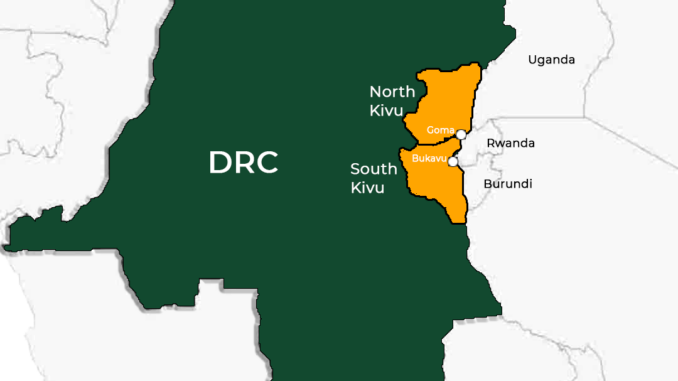
The outbreak, caused by the Bundibugyo strain of Ebola, has now spread beyond its epicentre in Ituri Province. Authorities confirmed the first cases in South Kivu Province on Thursday, approximately 500 kilometres south of the main outbreak zone. Cases have also been reported in North Kivu and neighbouring Uganda.
Health experts warn that there is currently no approved vaccine or treatment for the Bundibugyo strain, with estimates suggesting it could take between six and nine months before one becomes available.
The outbreak has already triggered international repercussions. India and the African Union, on Thursday, postponed the “India-Africa Forum Summit” which had been scheduled to take place in New Delhi next week, citing the evolving health situation in parts of Africa.
Meanwhile, the United States has imposed travel restrictions on individuals who have recently visited the Democratic Republic of Congo, Uganda or South Sudan, while Congo’s national football Team has cancelled planned World Cup preparations and fan events due to the outbreak.
Health Agencies continue to urge communities to cooperate with containment measures, warning that the coming days will be critical, in preventing further spread of the highly contagious disease.