
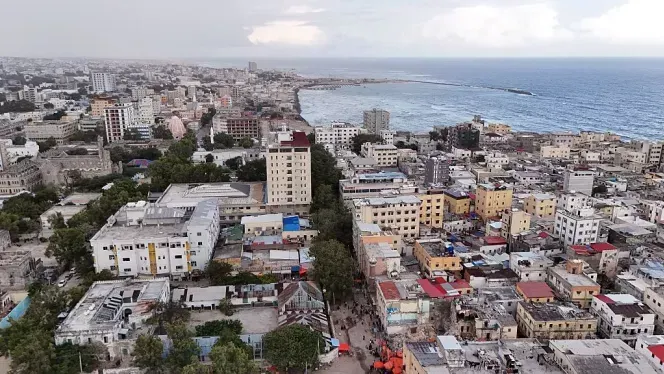
Somalia’s capital has been shaken by sustained heavy gunfire after Government forces and opposition fighters clashed amid an escalating dispute over delayed elections and a controversial extension of the presidential term.
The unrest unfolded late Wednesday and continued into the early hours of Thursday, with residents reporting explosions and mortar fire across multiple neighbourhoods of Mogadishu.
According to the report by BBC, the violence erupted after tensions intensified over President Hassan Sheikh Mohamud’s extended mandate, which the opposition has rejected as unconstitutional. The president’s term officially ended on 15 May, but lawmakers approved a one-year extension, triggering political backlash and calls for mass demonstrations.
Security forces described their operations as a “large-scale security operation” targeting heavily armed militias allegedly responsible for mortar attacks in parts of the city. Residents, however, reported widespread fear as shells struck residential areas, with at least one home reportedly set ablaze and civilians injured.
Former Prime Minister Hassan Ali Khaire, aligned with the opposition, claimed government forces attacked him and other leaders as they prepared for planned protests, accusing the presidency of undermining constitutional rights and suppressing peaceful assembly.
Former President Sharif Sheikh Ahmed also condemned the violence, insisting the opposition would not be intimidated, while reaffirming calls for continued resistance to what he described as an imposed political arrangement.
The situation has drawn concern from international actors. The United States embassy in Mogadishu described the escalation as “reckless,” urging restraint and dialogue, while the Intergovernmental Authority on Development (IGAD) and the European Union Delegation called for calm and a negotiated electoral roadmap.
Despite the unrest, Somalia’s Civil Aviation Authority confirmed that operations at Aden Adde International Airport remain unaffected, with flights continuing as scheduled.
President Mohamud, elected by parliament in 2022, has pursued a transition towards a one-person, one-vote electoral system. However, deep divisions remain over electoral laws, constitutional amendments, and the composition of electoral institutions, leaving Somalia’s fragile political architecture under renewed strain.
Somalia, which last held a direct national vote in 1969, continues to grapple with decades of conflict, including an ongoing insurgency by al-Shabab, further complicating efforts toward democratic consolidation.
As night fades over Mogadishu, the city stands suspended between uneasy calm and unresolved tension—its political horizon still clouded by uncertainty.