
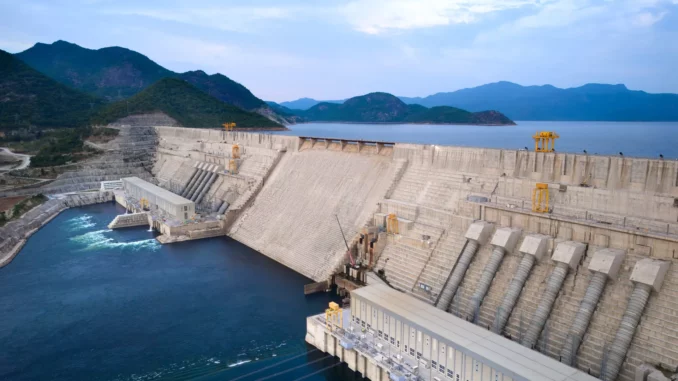
On Monday, September 29, 2025, Ethiopia has claimed that its newly inaugurated Grand Ethiopian Renaissance Dam (GERD) has helped mitigate the impact of recent floods in Sudan, even as speculation mounts that the structure may have contributed to the deluge.
Sudanese authorities issued a flood alert over the week-end following rising water levels along the Blue and White Nile, urging residents in several provinces to remain on high alert as excess water is discharged from local dams.
While Ethiopian officials argue that the dam has played a “significant role” in reducing potential catastrophe, experts and Sudanese officials remain unconvinced. Abbas Sharaky, a water resources professor at Cairo University, described the situation as a “man-made error,” attributing the surge to Ethiopia’s failure to gradually release water stored during the rainy season.
The nearly $5 billion GERD, Africa’s largest hydroelectric project, was inaugurated earlier this month and is expected to double Ethiopia’s electricity capacity. However, four turbines intended to regulate reservoir levels reportedly malfunctioned, preventing Ethiopia from releasing surplus water—thereby worsening the overflow downstream.
Egypt has also criticised Ethiopia’s unilateral actions, accusing Addis Ababa of violating international law by failing to reach a binding agreement with downstream nations. As waters begin to recede, the controversy underscores deepening regional tensions over control of the Nile, a lifeline shared by more than 270 million people.