
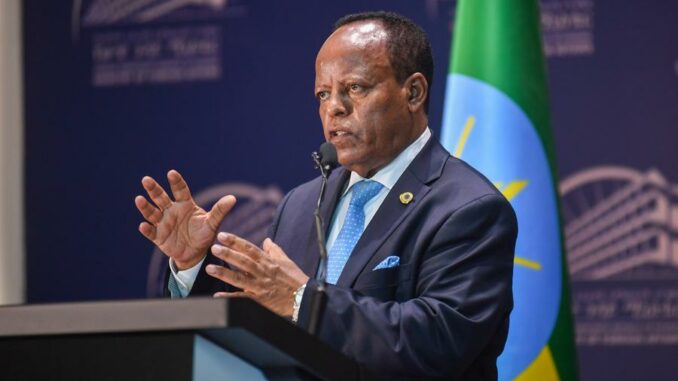
Ethiopia’s President, Taye Atske Selassie, has described securing access to the sea as a matter of sovereignty and historical justice, linking the ambition to the country’s 1896 victory at the Battle of Adwa.
Speaking on Monday in Addis Ababa during celebrations marking the 130th anniversary of Ethiopia’s defeat of Italian colonial forces, Taye said the right to obtain “reliable and sustainable” maritime access is “a sovereign trust inherited from those who died in the battle”.
He noted that historical records indicate one of Ethiopia’s principal diplomatic priorities following the victory was to secure ownership of a maritime outlet linking the nation to the wider world. Africa’s second-most populous country, with around 130 million people, has been landlocked since Eritrea gained independence in 1993. Ethiopia now relies heavily on neighbouring Djibouti for the bulk of its maritime trade.
During his address, the president emphasised that Ethiopia’s pursuit of port access would be anchored in peaceful means and mutual benefit. “The fate of 130 million people will be bright only when Ethiopia’s lack of direct access to the sea is resolved,” he said.
Eritrea has previously rejected suggestions of negotiating over its Red Sea coastline, characterising Ethiopia’s rhetoric as provocative and urging respect for its sovereignty and territorial integrity. Regional analysts say the issue remains sensitive in the Horn of Africa, where relations between Addis Ababa and Asmara have fluctuated despite a 2018 peace agreement that formally ended two decades of hostility.
The Battle of Adwa, fought on March 1, 1896, is widely regarded as a landmark African victory against colonial expansion and a defining moment in preserving Ethiopia’s independence.