
Burkina Faso has firmly rejected a U.S. request to accept deported individuals under President Donald Trump’s revived third-country deportation policy, marking a rare but symbolic rebuke of Washington’s approach to African migration cooperation.
Speaking on national television, Foreign Minister Karamoko Jean-Marie Traoré described the proposal as “indecent” and contrary to Burkina Faso’s “principle of dignity.” The request reportedly involved accepting not only Burkinabe nationals but also non-citizens expelled from the United States. “Burkina Faso is a land of dignity, not deportation,” Traoré declared. His remarks followed the U.S. embassy’s abrupt suspension of most visa services in Ouagadougou, redirecting applications to Togo — a move Traoré called “blackmail.”
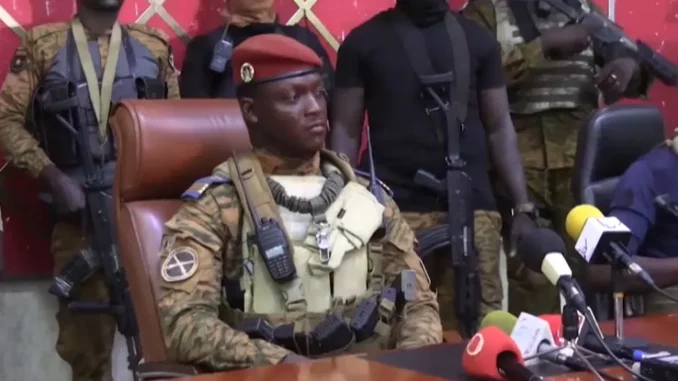
The rejection comes amid a broader geopolitical shift. Since seizing power in 2022, Captain Ibrahim Traoré’s junta has distanced itself from the West, reducing ties with France and the U.S. while strengthening relations with Russia and China. Traoré, who portrays himself as an anti-imperialist Pan-Africanist, has consistently challenged Western influence in the region. In contrast, countries like Rwanda, Ghana, and Eswatini have accepted U.S. deportees, often in exchange for financial aid or migration cooperation packages. Rights groups have criticized the program, citing reports of poor detention conditions and secretive agreements. Burkina Faso’s stance highlights growing resistance in parts of Africa to U.S. pressure and offers a glimpse of the continent’s shifting diplomatic landscape — one increasingly defined by sovereignty, strategic independence, and rising South-South partnerships.