
https://cdn.britannica.com/97/244297-050-27BACC49/Locator-map-Niger.jpg
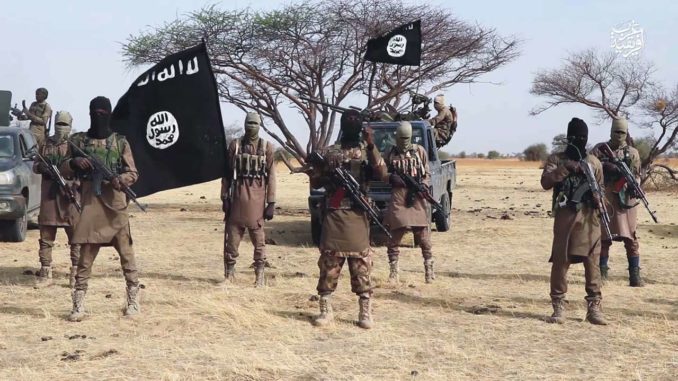
On 8 December 2025, authorities in Niger State hosted 100 schoolchildren who were freed over the week-end, after being abducted from St. Mary’s Catholic School in Papiri, on 21 November 2025.
The circumstances surrounding their release remain undisclosed, and officials have not confirmed whether a ransom — a frequent feature of such attacks — was paid. In total, 303 pupils and 12 teachers were seized during the attack, with 50 escaping shortly after and at least 150, along with their teachers, still held by the gunmen.
The released pupils, aged 10 to 17, arrived at the Niger Government House in Minna accompanied by military convoys and were greeted by state officials. Governor Mohammed Bago announced that health professionals would assess the children before their return to their families. Meanwhile, parents in Papiri expressed distress, stating they learned of the release through media reports and remained uncertain about the fate of their children.
President Bola Tinubu commended security agencies for securing the release of the 100 pupils, reaffirming his directive that all abducted Nigerians be safely rescued. No group has claimed responsibility, though locals suspect armed gangs known for ransom kidnappings across northern Nigeria. The attack is one of several recent mass abductions, including the kidnapping of 25 pupils in Kebbi State and 38 worshippers in Kwara State, the latter of whom have since been freed.
DRC Battles Worst Cholera Outbreak in 25 Years as Nearly 2,000 Die -UNICEF
https://www.doctorswithoutborders.ca/wp-content/uploads/2025/10/MSB221460High-scaled.jpg
The Democratic Republic of Congo is contending with its most severe cholera outbreak in a quarter of a century, with nearly 2,000 deaths recorded since January, the United Nations Children’s Fund (UNICEF) has warned on Monday, December 8.
In a new situation report, the agency described a rapidly escalating public health emergency driven by widespread gaps in water and sanitation infrastructure, ongoing conflict and limited financial resources. UNICEF confirmed 64,427 cases and 1,888 fatalities nationwide, with children accounting for almost a quarter of infections.
At least 14,818 children have fallen ill, and 340 have died, underscoring the disproportionate impact on younger populations. The disease has now spread to 17 of the country’s 26 provinces, including the conflict-stricken eastern regions and densely populated urban centres such as Kinshasa.
The Agency highlighted a particularly devastating episode in a Kinshasa orphanage where 16 out of 62 children died within days of the outbreak.
“Congolese children should not be so gravely affected by what is a wholly preventable disease,” UNICEF spokesperson John Agbor said, calling for urgent, coordinated interventions to prevent further loss of life.
Despite government efforts -including a $192 million national elimination plan- the response remains severely underfunded. UNICEF has appealed for $6 million in 2026 to sustain rapid-response operations, warning that delays in financing could lead to an even greater humanitarian toll. Agbor cautioned that “without additional funds and coordinated action, many more lives could be lost.”
Cholera, transmitted through contaminated water, spreads quickly in environments with poor sanitation — a reality for millions across the DRC. Only 43% of Congolese have access to basic water services, the lowest rate on the continent, while just 15% have access to sanitation facilities. Years of insecurity and displacement in the mineral-rich east have further weakened the country’s already fragile systems.
The outbreak reflects a wider continental resurgence, with African health authorities reporting rising case numbers in several countries, including Angola and Burundi, and a 30% regional increase compared with the previous year. UNICEF is urging donors, regional partners and the international community to scale up support, warning that without swift action, the DRC faces a prolonged and catastrophic public health crisis.
Tanzania Urges Citizens to Stay Indoors as Independence Day Protest Calls Mount
https://www.mwigulunchemba.com/wp-content/uploads/2025/11/3V2B3661-scaled-1-768×512.jpg
Tanzania’s Prime minister appealed to citizens to remain at home on Tuesday, December 9, as activists mobilised for nationwide protests over the Government’s handling of demonstrations linked to the October elections.
While the United Nations and opposition groups assert that hundreds were killed in the unrest, authorities in Dodoma insist the figures are exaggerated. The protests were ignited by the exclusion of major opposition candidates, a process that preceded President Samia Suluhu Hassan’s declaration as winner of the presidential poll. With nearly 98% of the vote.
In a video message released on December 8, via the government information centre’s X account, Prime Minister Mwigulu Nchemba encouraged the public to stay indoors on 9 December, the date mainland Tanzania marks its independence from Britain. He urged citizens without emergencies to “rest and celebrate” at home, even as the government cancelled official commemorations following online calls last month for mass demonstrations on Independence Day. The administration has acknowledged that fatalities occurred during the election-related unrest but has rejected claims of excessive force by security agencies.
Police officials stated on Friday that any protest would be unlawful, arguing that they had not received formal notification from organisers. Witnesses in Dar es Salaam and Arusha reported heavy deployments of police and army personnel along major roads on Monday. President Hassan has appointed a commission to investigate the violence surrounding the elections, while continuing to deny allegations of wrongdoing by the security forces and accusing protesters of attempting to destabilise the state.
Ouattara Sworn In for Fourth Term After Winning 89.77% of Vote
G7rBrXVWAAAvSp4 (2048×1366)
Côte d’Ivoire’s President Alassane Ouattara was sworn in on 8 December 2025 before the Constitutional Council in Abidjan, securing a fourth five-year term after winning the presidential election with 89.77% of the vote.
In his oath, he pledged to uphold the Constitution, safeguard citizens’ rights and serve as “the President of all Ivorians without exception.”
During the ceremony, Ouattara highlighted national gains achieved over the past 15 years, including strengthened state authority, sustained peace and robust economic progress. He also underscored ongoing challenges such as terrorism, cyberthreats and food security, while setting out priorities for the next five years- positioning Côte d’Ivoire as a regional energy hub and placing youth, women, industrial transformation and modern infrastructure at the forefront of his agenda.
A former Central banker and IMF deputy managing director, the 83-year-old leader first took office in 2011 after winning the 2010 election and was re-elected in 2015 and 2020. The inauguration, attended by several African heads of state, marked the formal beginning of his new mandate.
Congo Accuses Rwanda of Breaching US-Brokered Peace Deal, as Regional Tensions Deepen
https://img.lemde.fr/2024/03/30/484/0/5813/2906/1440/720/60/0/eba0d04_1711780101639-026-2024-03-29-pb-lemonde-itw-portrait-felix-tshisekedi-rdc.jpg
The President of the Democratic Republic of Congo has accused Rwanda of breaching a US-brokered peace agreement signed in Washington, DC on 4 December 2025, undermining efforts to end the decades-long conflict in eastern Congo.
Addressing Parliament on Monday, December 8, President Felix Tshisekedi alleged that, despite the formal commitments made in the US capital, “Rwanda is already violating its commitments.”
He claimed that the day after the signing, the Rwandan army launched heavy-weapon fire from the Rwandan town of Bugarama into Congolese territory, causing extensive human and material damage in Kaziba, Katogota and Lubarika in South Kivu. Rwandan Foreign Minister Olivier Nduhungirehe dismissed the allegations as “ridiculous,” accusing Kinshasa of shifting blame.
The Washington agreement, signed by Tshisekedi and President Paul Kagame, followed a preliminary peace accord reached in June by the foreign ministers of both countries under US mediation, with President Donald Trump hosting the officials. Kagame had hailed the deal as containing “everything needed to end this conflict once and for all”.
However, Tshisekedi reminded lawmakers that the framework requires the immediate withdrawal of Rwandan troops from eastern Congo, the dismantling of foreign armed groups including the FDLR, a cessation of hostilities and the establishment of a joint security mechanism.
He reiterated Congo’s faith in the diplomatic track and affirmed Kinshasa’s commitment to implementing the accord, even as clashes between AFC-M23 rebels and government forces persisted on Monday in Masisi territory, North Kivu. The M23 resurgence in 2021 reignited long-running violence that has killed thousands and displaced millions, with Kinshasa and the UN continuing to accuse Rwanda of backing the rebels — a claim Kigali denies.
Separately, regional tensions intensified as Burundi’s Foreign Minister Edouard Bizimana on Monday accused Rwanda of continuing “destabilising activities” along the Congo border. He vowed that the roughly 15,000 Burundian troops deployed in eastern Congo would remain until their mission is “fully accomplished”.
Bizimana alleged that Rwanda continues to deploy soldiers and attack Burundian forces operating in Congo, warning that any assault on Burundian citizens or troops “will never be tolerated.” Rwanda has yet to respond. Relations between the two neighbours deteriorated early last year after Burundi closed its border with Rwanda over accusations that Kigali was supporting Burundian rebels in Congo — a charge Rwanda rejects.
Angola Launches First National Civil Aviation Academy to Strengthen Aviation Capacity
https://aviacaoinclusiva.anacmulher.com/wp-content/uploads/elementor/thumbs/aaca-r9b4is8dc6u2oybau2mv4b5wgn1avhyzfrsbccmr8w.jpg
Angola officially inaugurated its first Academia de Aviação Civil de Angola (AACA) on 8 December 2025 at the Aeroporto Internacional 4 de Fevereiro in Luanda, marking a significant milestone in the country’s ambition to build a sovereign and competitive aviation ecosystem.
The Academy is set to train pilots, air-traffic controllers, technical operators and other aviation specialists, with the first cycle of courses scheduled to begin in January 2026.
During the launch, the Minister of Transport underscored the academy’s role in positioning Angola as a continental aviation hub.
The initiative is designed to reduce reliance on foreign training Centers, expand employment opportunities, enhance operational standards and strengthen international cooperation. The government views the AACA as a strategic pillar to modernise the civil-aviation sector, spur economic growth and secure a more autonomous and sustainable future for the nation’s air transport industry.
Ramaphosa Declares Gender-Based Violence a National Disaster, Calls for Urgent Action
https://www.unwomen.org/sites/default/files/2024-11/southafrica_totalshutdown_evawprotest_2018_img_9074_1200x800.jpg
President Cyril Ramaphosa, in his weekly newsletter, on 8 December 2025, highlighted South Africa’s persistently high levels of violence against women and children, describing gender-based violence and femicide (GBVF) as a national disaster requiring extraordinary measures.
As the country observes the 16 Days of Activism campaign from 25 November to 10 December, he drew attention to the Human Sciences Research Council’s 2022 data showing that over 35% of women over 18 have experienced physical or sexual violence, primarily from intimate partners, and emphasised the corrosive social and economic effects of GBVF.
The President outlined government measures to address the crisis, which include expanded victim-friendly facilities, specialised GBV desks at police stations, faster evidence processing, a new 24-hour service for protection orders, and progress on legislation passed in 2022 strengthening sexual offences registers and courts.
With GBVF now officially classified as a national disaster, key departments -including Police, Justice, Social Development, Health, and Basic Education- are mandated to scale up survivor support, shelters, and emergency resources, while reporting progress to the National Disaster Management Centre.
C. Ramaphosa stressed that men must take a central role in prevention, calling for sustained national dialogues to confront drivers of violence such as toxic masculinity and harmful cultural norms. He further urged a whole-of-society approach, appealing to communities, civil society, faith leaders, businesses, unions, and citizens to report abuse, challenge enabling attitudes, and work collectively to achieve a society free from gender-based violence and femicide.
UNEA-7 Convenes in Nairobi to Drive Global Environmental Action
https://english.news.cn/africa/20251208/92b4f77c469e453c8432432ee685d72a/DuJswy2zIHpmKQO9.jpg
The seventh session of the United Nations Environment Assembly (UNEA-7) commenced on Monday, 8 December 2025, in Nairobi, Kenya, with nearly 6,000 delegates from over 170 countries gathering to address escalating ecological threats.
The five-day Conference, themed “Advancing Sustainable Solutions for a Resilient Planet,” brings together environment officials, multilateral agencies, academia, industry, and Civil society to deliberate on urgent issues such as climate change, habitat loss, and pollution.
UN Deputy Secretary-General Amina J. Mohammed highlighted the pressing need for decisive action to safeguard planetary health and ensure multilateral efforts yield tangible results.
Delegates at UNEA-7 will examine 15 draft resolutions and three draft decisions aimed at enhancing glacier protection, promoting sustainable metal and mineral production, and reducing the environmental footprint of artificial intelligence. Other key topics include circular economy strategies, transboundary freshwater management, migratory species, ocean governance, and climate justice. UNEA President Abdullah Bin Ali Al-Amri emphasised that science-driven consensus and strengthened multilateral agreements will guide discussions to foster global resilience.
Kenya’s Cabinet Secretary for Environment, Climate Change, and Forestry, Deborah Barasa, underlined that the assembly will reinforce ongoing efforts to secure a safer, greener, and more resilient future. She noted that Kenya aims to use UNEA-7 as a platform to combat plastic pollution and accelerate green, inclusive economic growth. The conference’s opening also featured a visual showcase of the Nairobi venue on 8 December 2025, reflecting the assembly’s high-profile global participation.
