
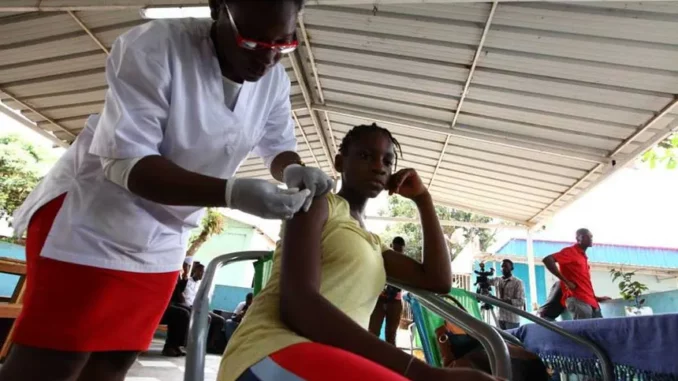
Angola has increased its national vaccination coverage to 70 per cent, a significant achievement attributed to Government efforts to procure and distribute vaccines across the country, according to health authorities.
Speaking on World Immunisation Day, observed on 9 June, Angola’s National Director of Public Health, Helga Freitas, said the coverage rate remains below the 95 per cent target recommended by the World Health Organization, but continues to play a crucial role in reducing child mortality and preventing vaccine-preventable diseases.
Freitas identified access to healthcare services and the competing responsibilities of parents, particularly mothers, as some of the key challenges affecting immunisation uptake.
Despite these obstacles, she described the performance of Angola’s National Immunisation Programme as positive, citing improvements in service delivery and the expansion of cold-chain infrastructure for vaccine storage.
According to the health official, the country now has about 1,300 health facilities equipped with vaccination programmes and appropriate storage conditions, helping to improve public access to immunisation services.
She added that the Ministry of Health continues to deploy mobile health teams to reach remote communities that remain far from healthcare facilities. These teams not only administer vaccines but also distribute vitamin A supplements, insecticide-treated mosquito nets and provide public health education.
Freitas highlighted innovative measures being implemented to improve access, including the operation of vaccination posts on Sundays in some areas, such as Cazenga. She also acknowledged the support of international partners in strengthening vaccination efforts, particularly through the provision of transport for outreach teams working in hard-to-reach locations.
The public health director urged parents to ensure their children complete their vaccination schedules within the first year of life, stressing that vaccines remain one of the most effective tools for protecting children and saving lives.