
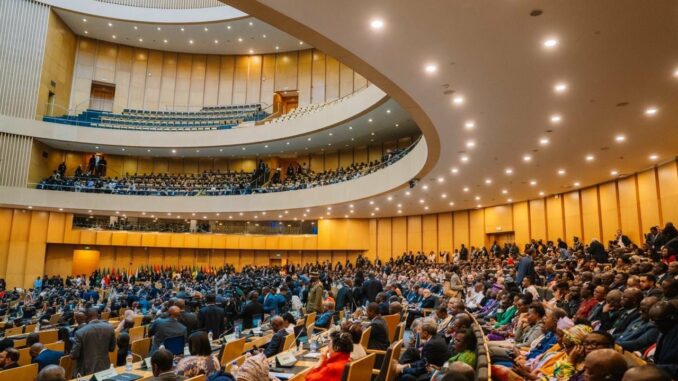
The 39th Ordinary Session of the Assembly of the African Union (AU) concluded on Sunday in Addis Ababa, setting out Africa’s strategic priorities for 2026 and beyond, with water security at the heart of its development blueprint.
Held under the 2026 theme, “Assuring Sustainable Water Availability and Safe Sanitation Systems to Achieve the Goals of Agenda 2063,” the two-day summit brought together leaders from the AU’s member States at the Union’s headquarters.
Deliberations centred on sustainable water management as a catalyst for socio-economic transformation and long-term stability. As the AU’s highest decision-making organ, the Assembly reviewed progress under the second 10-year implementation plan (2024–2033) of Agenda 2063, the bloc’s 50-year continental development framework.
Leaders assessed gains made, identified implementation gaps, and explored strategies to strengthen continental unity and Africa’s influence within the global multilateral system. The Summit also confirmed the election of Évariste Ndayishimiye, President of Burundi, as AU Chairperson for 2026, succeeding João Lourenço of Angola.
In his report covering 2025, President Lourenço outlined progress in advancing Agenda 2063, mobilising infrastructure investment, deepening integration through the African Continental Free Trade Area, and enhancing institutional efficiency within the AU. He reiterated the urgency of silencing the guns across the continent as a prerequisite for sustainable development.
President Ndayishimiye pledged to reinforce Africa’s global standing, advocating a fairer and more inclusive international order amid persistent security threats, rising unilateralism, economic tensions and the mounting impacts of climate change.
Meanwhile, AU Commission Chairperson Mahmoud Ali Youssouf highlighted pressing concerns, including persistent peace and security challenges, geopolitical fragmentation, unconstitutional changes of government, financial and governance deficits, and climate vulnerability.
To unlock Africa’s development potential, he stressed the need to accelerate industrialisation, modernise agriculture, harness energy resources and expand high-performing infrastructure — conditions he described as indispensable to achieving sustained economic growth.