
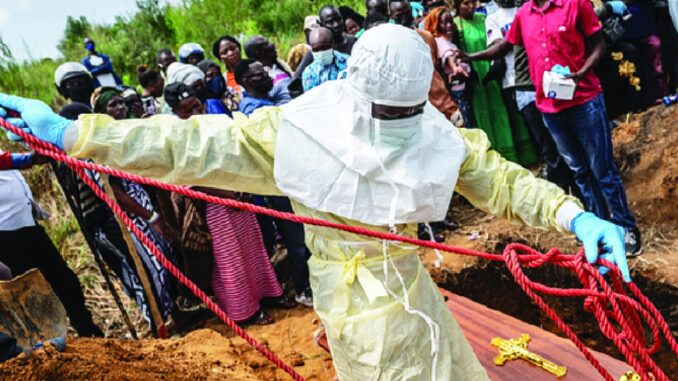
An Ebola outbreak in eastern Democratic Republic of Congo has killed more than 1,700 people, becoming the fastest-growing outbreak of the disease recorded, according to health authorities.
Government data released on Tuesday, August 4, 2026, showed that 3,802 cases have been recorded, including 1,707 deaths, with health officials warning that the outbreak is spreading faster than they can monitor.
Africa Centres for Disease Control and Prevention (Africa CDC) Director-General Jean Kaseya said the outbreak’s trajectory remains concerning, noting that 60% to 70% of new infections are occurring through community transmission rather than identified contacts. He said contact tracing efforts were not effectively controlling the spread and described the outbreak as already the second-largest Ebola outbreak ever recorded globally.
The outbreak, declared on May 15, has been linked to the Bundibugyo virus, for which there are currently no approved vaccines or treatments. Response efforts have been complicated by insecurity, armed group activity, community mistrust, difficulties accessing affected areas and delays in tracing contacts.
The majority of cases are concentrated in Ituri province, which accounts for nearly 90% of infections, although cases have also been reported in five other provinces, including Kisangani.
The World Health Organization (WHO) said it is monitoring more than 17,000 potential contacts, with nearly 80% receiving daily follow-up. The agency has also increased testing capacity to more than 2,000 samples per day from just 20 previously.
Healthcare workers have also been affected, with more than 100 infected since the start of the outbreak. Some medical workers have staged protests over unpaid wages and unsafe working conditions.
Health officials say the response continues to face major challenges, including funding shortages, attacks on health facilities, ongoing conflict and displacement linked to armed violence and illegal mining activities. Clinical trials for potential treatments and vaccines are ongoing as authorities intensify efforts to contain the outbreak.