
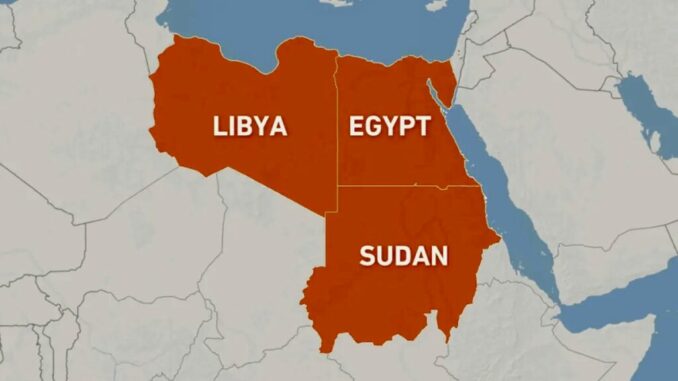
The remote desert triangle where Sudan, Libya, and Egypt meet has erupted into a crucial front in Sudan’s ongoing civil war, as paramilitary Rapid Support Forces (RSF) claimed full control of the Sudanese portion of the area in June.
Long regarded as a lawless expanse hidden from the world, the triangle has become a hotspot for gold smuggling, weapons trafficking, and human migration, according to a new report by the Middle East Eye. With its strategic location and rich reserves of oil, gas, and minerals, control of the region offers both economic leverage and a gateway for illicit trade across North and East Africa.
After years of joint influence with the Sudanese Armed Forces (SAF), the RSF — now at war with the SAF — has used alliances with Libyan militias loyal to eastern Libyan commander Khalifa Haftar to retain access to fuel, weapons, and smuggling routes. The area also became a focal point for conflict between the RSF and Darfur-based rebel groups aligned with the SAF. According to one Sudanese researcher, “the RSF profited the most from the triangle as they extracted gold from the region and got involved in other trades there.”
Analysts say the power vacuum following the fall of Libya’s strongman Muammar Gaddafi in 2011, coupled with Sudan’s descent into war in 2023, intensified the militarization of the region. Experts warn that the battle over the triangle is far from over. As foreign actors — including the United Arab Emirates (UAE) — fuel competing sides, this once-obscure region has become pivotal to both Sudan’s war and the wider instability plaguing the Sahel. “The triangle region would threaten the security in Libya and Sudan and the Sahel region at large,” Islam Alhaj, a Libyan political analyst, warned.