
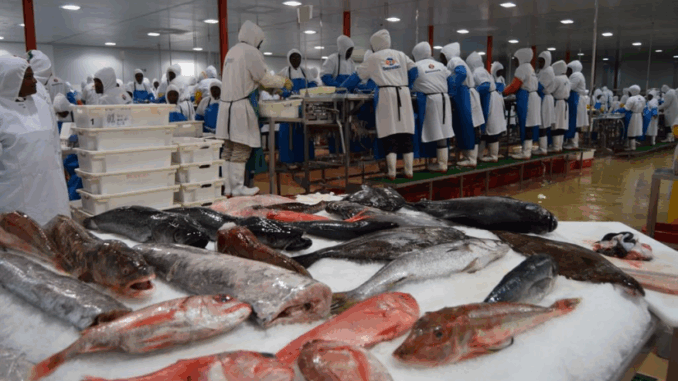
Namibia is set to overhaul its fishing industry by shifting from exporting raw materials to building a full-fledged seafood economy, Minister of Agriculture, Fisheries, Water, and Land Reform Inge Zaamwani announced in Walvis Bay, on Wednesday, August 20.
As part of the new National Development Plan, the government aims to increase the share of locally processed catch from 23 percent to 45 percent within five years, creating 15,000 permanent jobs in processing and reducing raw fish exports by 60 percent. To achieve this, all quota holders will be required to process their catches locally, while the government encourages industry collaboration to drive the production of high-value seafood products for global markets.
The minister acknowledged challenges facing the sector, including a decline in its GDP contribution from 4.5 percent in 2023 to 4.1 percent in 2024, caused by reduced allowable catches of key species such as hake and horse mackerel. In response, Namibia will tighten bycatch regulations, raising the fee rate from 15 to 50 percent, and enhance compliance with new 2 percent bycatch limits. Additional measures include combating illegal, unreported, and unregulated fishing through advanced monitoring technologies and joint maritime patrols with defence and police forces. Despite current pressures, the government views the sector as vital to economic growth, exports, and employment, making its transformation a national priority.