
Mozambique recorded 5.6 billion U.S. dollars in foreign direct investment (FDI) in 2025, representing a 60.2 per cent increase, according to a report released by the Bank of Mozambique.
The Central bank attributed the sharp rise largely to major projects and growth in the extractive industry, particularly investments linked to oil and gas developments in the Rovuma basin, as well as the revival of coal and heavy sands operations.
According to the report, increased capital inflows were driven by hydrocarbon prospecting and research activities tied to liquefied natural gas projects. The document also noted that firms outside the major project category had shown mixed performance in recent years, with investment peaking in 2021 due to growing demand in transport, storage and communications services linked to major projects. In 2024, Mozambique’s total FDI stood at 3.5 billion dollars, reflecting a 41.5 per cent increase from the previous year.
The extractive industry remained the largest recipient of investment flows in 2025, attracting 5.2 billion dollars, or 91.5 per cent of total FDI, marking a 68.2 per cent rise compared to 2024. The manufacturing sector followed with 120.9 million dollars, accounting for 2.1 per cent of total FDI, although this represented a 10.4 per cent decline year-on-year.
Real estate, renting and business services activities attracted 66.4 million dollars, equivalent to 1.2 per cent of total FDI, up 17.9 per cent from the previous year. The central bank projects FDI to increase further to 5.8 billion dollars in 2026, supported by ongoing natural gas developments in the Rovuma basin.
Mozambique currently has three approved mega-projects for exploiting liquefied natural gas reserves off the coast of Cabo Delgado Province, considered among the largest in the world. One project is led by TotalEnergies, while another involves ExxonMobil in an estimated 30-billion-dollar development awaiting a final investment decision in Afungi.
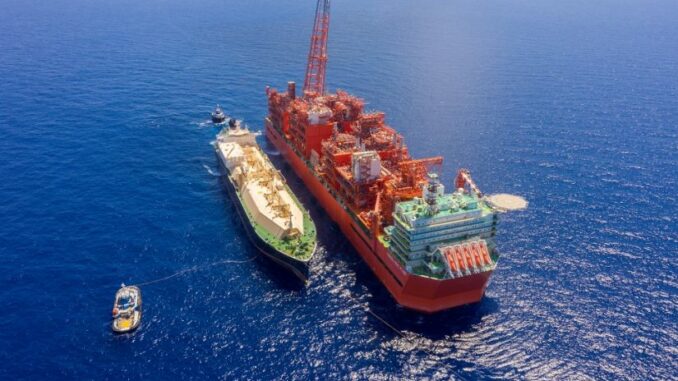
Meanwhile, Eni has been producing around seven million tonnes per annum since 2022 through the Coral Sul floating platform. Production is expected to double from 2028 with the addition of the Coral Norte platform under a 7.2-billion-dollar investment plan.