
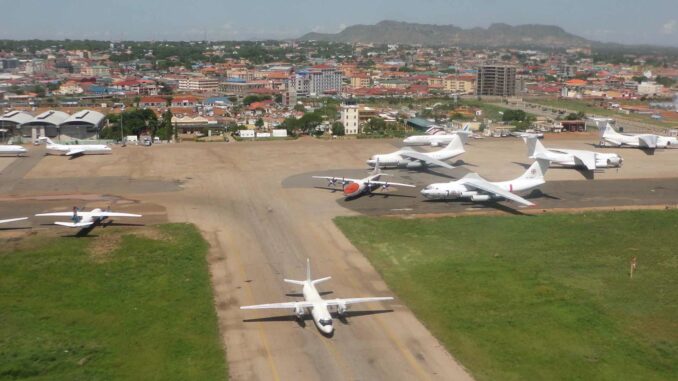
South Sudan’s President Salva Kiir Mayardit has inaugurated South Sudan’s first fully operational independent air traffic management system, marking a significant milestone in the country’s aviation sector and national sovereignty.
The system, operated from a newly built control tower at Juba International Airport, enables South Sudan to independently monitor and manage its airspace for the first time since gaining independence from Sudan in July 2011.
Under a temporary 2016 agreement brokered by the International Civil Aviation Organization, Sudan had continued managing South Sudan’s upper airspace after independence. The arrangement, initially expected to end in 2019, was extended due to delays in training local aviation personnel.
Speaking during the launch ceremony in Juba on Monday, Kiir described the development as a reclaiming of national sovereignty. “We have reclaimed our sovereignty by taking control of our airspace. From today onwards, our airspace is in our hands,” he said.
The President further directed the Civil Aviation Authority to ensure uninterrupted operation of the new system, stressing that the country “cannot afford to fail this system”. Officials said the project would strengthen air safety, improve flight monitoring and regulatory oversight, and boost revenue mobilization through independent airspace management.
Director General of the South Sudan Civil Aviation Authority, Ayiei Garang Deng, said the system ranks among the most advanced on the African continent, with installations in Wau and Malakal. According to him, South Sudan now operates six radar systems — three primary and three secondary radars — positioning the country among Africa’s leading aviation monitoring networks.