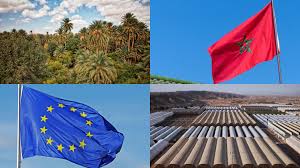
The European Union, together with Germany, Italy, and France, has launched a €348 million program to support Morocco’s National Water Plan, in a coordinated funding effort that reflects growing concern over the country’s vulnerability to climate-driven water stress. The package combines roughly €48 million in EU grants with approximately €300 million in concessional loans provided under the JEFIC framework.
The loan component is financed by three major European development institutions: Germany’s KfW development bank, Italy’s Cassa Depositi e Prestiti, and the French Development Agency (AFD). The initiative follows what the EU describes as a “Team Europe” approach, pooling bilateral and multilateral instruments to maximize impact on Morocco’s water management capacity.
The program targets several priorities outlined in Morocco’s National Water Plan: improving governance and infrastructure, building resilience against extreme weather events, protecting groundwater reserves, and strengthening the institutional capacity of the water sector. A technical assistance component will facilitate the sharing of expertise between European and Moroccan specialists.
The timing is significant. Morocco endured a sustained period of drought between 2017 and 2025, compounded by rising water demand from population growth, urbanization, and agriculture. These pressures have accelerated government efforts to reform the water sector and expand supply-side infrastructure. Speaking at the launch, Equipment and Water Minister Nizar Baraka described water as a national priority requiring long-term protection for future generations, adding that Morocco has already begun restructuring its water management model to withstand climate shocks.
EU Ambassador Dimiter Tzantchev framed the initiative as a concrete expression of the partnership between Brussels and Rabat under the Green Partnership and broader Mediterranean cooperation frameworks. Ambassadors from Germany, Italy, and France also addressed the launch, each underscoring their country’s specific contributions — climate adaptation and groundwater protection for Berlin, water sector expertise through Italy’s Africa strategy, and a focus on climate resilience and gender equality from Paris. The program forms part of the wider EU-Morocco cooperation agenda on shared environmental challenges and sustainable development across the Mediterranean.